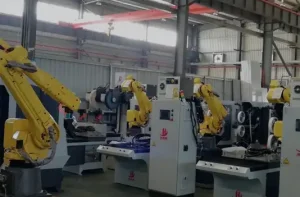
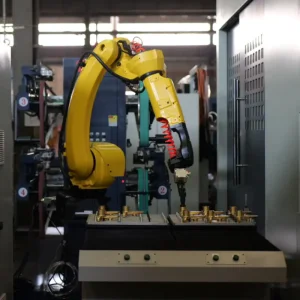
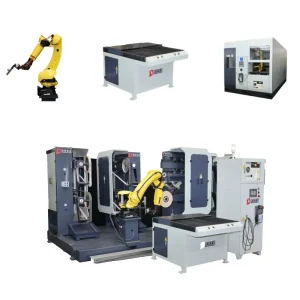
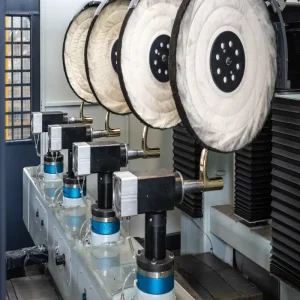
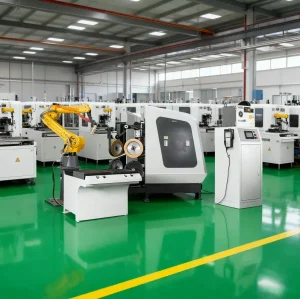
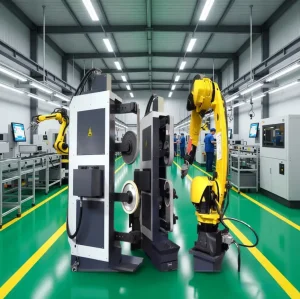
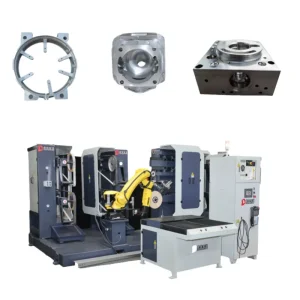
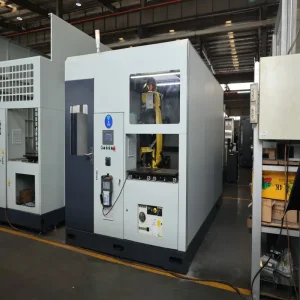
In high-precision manufacturing, surface finishing processes such as grinding, deburring, and polishing have traditionally stood as bottlenecks. Consuming up to 30% of total manufacturing labor hours and acting as primary sources of occupational health hazards (such as silicosis and vibration-induced injuries), manual finishing is increasingly untenable. The modern solution lies in ABB Robotic Polishing Cells—highly integrated systems that combine industrial workhorses like the ABB IRB 6700 or IRB 2600 series with sophisticated active force control mechanisms, dust filtration systems, and custom abrasive contact assemblies.
Integrating ABB's state-of-the-art robotic controllers with specialized compliance heads allows these cells to maintain a constant pressure profile on complex 3D profiles. Unlike manual operators whose output quality inevitably degrades over shifts, robotic cells achieve consistent surface roughness values (down to sub-micron Ra metrics) over continuous 24/7 cycles. This whitepaper analyzes how our integrated systems address critical operational objectives: maximizing overall equipment effectiveness (OEE), eliminating reject rates, and maintaining structural compliance under demanding industrial regulations.
Monitors contact force at kilohertz frequencies, allowing the robot to dynamically adapt to casting variations and prevent gouging or over-polishing.
Enables complex toolpath simulations offline, reducing physical teaching downtime from days to hours for fast line changeovers.
Integrated wet scrubbers capture flammable aluminum or magnesium dust immediately, maintaining compliance with ATEX and OSHA standards.
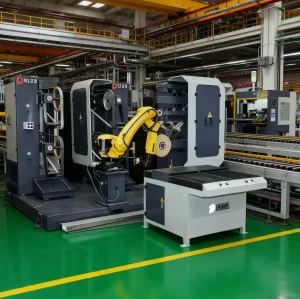
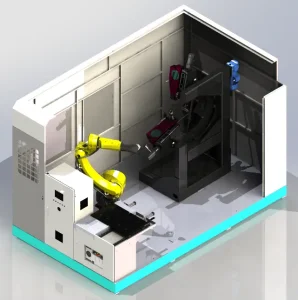
An ABB robotic polishing cell is not merely an arm holding a buffer. It is a highly engineered ecosystem. The core performance is dictated by the integration of three physical and digital layers: the robotic manipulator, the tool compliance interface, and the abrasive tracking software.
1. The Kinematic Base: By utilizing ABB's IRC5 and OmniCore controller platforms, our systems leverage *QuickMove* and *TrueMove* path planner algorithms. This guarantees smooth, continuous acceleration trajectories without path deviation, which is vital when polishing curved profiles like faucets or engine castings.
2. Active Force Control (AFC): By incorporating a fast-response force-torque sensor at the wrist (e.g., 6-DOF sensor) or an active contact flange, the cell adjusts tool deflection dynamically. Standard pneumatic systems suffer from latency; our closed-loop electronics process load cells at 1000 Hz, maintaining a target force of 10N to 150N with a precision tolerance of ±1N.
3. Abrasive Wear Compensation: Abrasive belts and wheels wear down over time. Without intervention, surface finish degrades. The cell features automatic laser measuring or tactile calibration routines that recalculate the tool offset in real time. The robot adapts the path depth and rotational speed (RPM) to maintain consistent surface speeds (cutting speed Vc).
| Manipulator Options | ABB IRB 2600 / IRB 4600 / IRB 6700 |
| Force Sensing Range | 0 - 500 N (Closed-loop electronic feedback) |
| Abrasive Media | Sanding Belts (multi-wheel), Sisal wheels, Buffing mops |
| Target Roughness (Ra) | Up to Ra 0.1 μm (Mirror Finish) |
| Dust Control System | High Vacuum Wet Type Scrubber (ATEX Compliant) |
| Control Interface | ABB RobotStudio Offline Software + HMI touchscreen |
As a leading hub for automated metalworking, Chinese factories have transitioned from basic manufacturing to high-end engineering integrators. Xiamen DingZhu (DZ) Intelligent Equipment Co., Ltd represents the peak of this evolution. Located in Xiamen, we design, program, and build comprehensive robotic cells that integrate seamlessly with international standards.
Unlike pure software integrators, DingZhu possesses over two decades of mechanical foundry expertise. We manufacture automatic core shooting systems, gravity die casting machines, and low-pressure die casting (LPDC) systems. This deep metallurgical knowledge allows us to design polishing paths that account for casting flash, gates, and parting lines.
We have optimized our overseas parts distribution networks to reduce downtime. DingZhu runs dedicated parts warehouses in localized markets including Turkey, India, Egypt, and Iran. By housing over 80% of critical wear components (spindle belts, bearings, compliance pneumatic seals) locally, we cut logistics delays and raise plant efficiency by 60%.
By sourcing critical components globally (such as Siemens PLCs, Omron electrics, and ABB robotic arms) and assembling them with high-grade local structural steel and safety fencing, we deliver high-spec systems at a fraction of the cost of Western competitors, without compromising on safety or reliability.
Robotic finishing cells are versatile systems adapted across various production lines. Depending on the workpiece material, weight, and cycle-time requirements, we build specialized configurations.
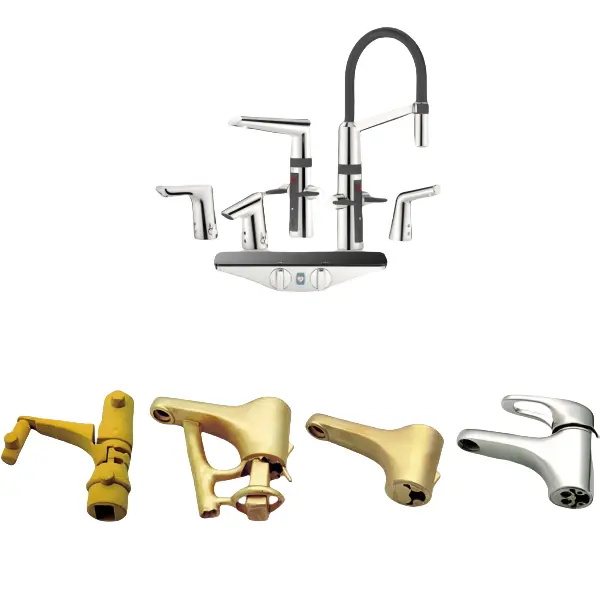
Plumbing brassware requires pristine mirror-finish surfaces prior to electroplating. Our cells utilize multi-belt grinding stations (with varying grit sizes from P180 to P800) followed by cotton buffing wheels with automated compound spraying. Active force feedback ensures the complex contours of faucet spouts and handles remain uniform.
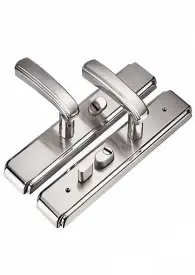
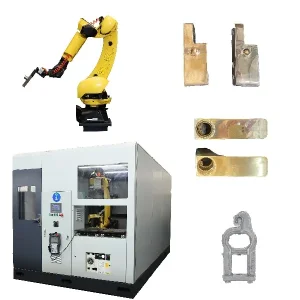
For premium zinc and aluminum alloy door handles, our robotic system handles rapid part changeovers. By using double-gripper systems, the robot picks a raw part, presents it to the grinding belts, moves to the polishing wheel, and deposits the finished handle back onto the conveyor without stopping.
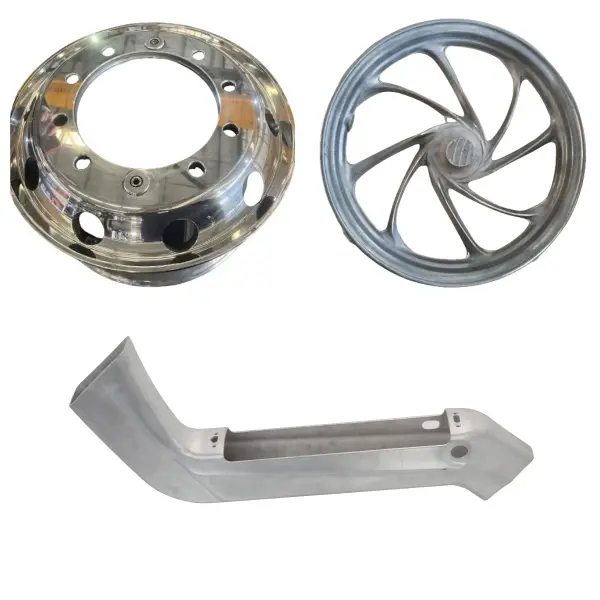
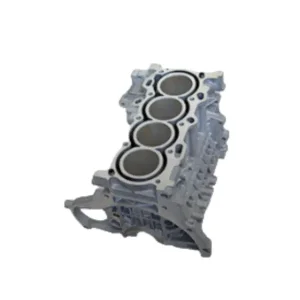
Engine blocks and motor casings require heavy-duty deburring of flash along mold joints. Using high-payload ABB robots (such as the IRB 6700), the cell processes heavy cast parts against robust grinding wheels, shaving off thick gates with precision and ensuring sealing surfaces are completely flat.
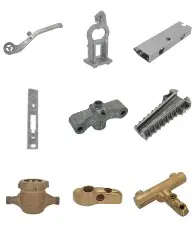
Heavy-duty industrial pump housings, valve valves, and brackets require reliable scale and burr removal. Our cells are configured with tool changers, allowing the robot to swap out aggressive grinding discs for finer flap wheels, cleaning interior geometries and blind holes automatically.
For procurement managers and factory directors, purchasing automated finishing systems is a complex capital expenditure (CAPEX) project. To ensure high return on investment (ROI) and trouble-free integration, the following engineering factors should be evaluated during the factory audit:
Robotic grinding exerts immense reaction forces back onto the robot structure. The base frame must be heavy, welded structural steel (not lightweight aluminum extrusion), stress-relieved via heat treatment to prevent vibration feedback loop during high-speed grinding.
Fine metal particles (specifically aluminum, magnesium, and brass) present severe explosion hazards. Ensure the cell contains dust-proof electrical cabinets (IP65 minimum), explosion-proof motors (ATEX/Ex rated), and a dedicated wet-scrubber extraction ducting system.
An optimal cell must support multiple finishing operations. Ensure the supplier offers modular belt heads with dual-tensioning arms and pneumatic quick-change tool systems, allowing you to run different products on the same line with minimal mechanical adjustment.
The robot choice depends on whether the robot holds the part (Workpiece Handling) or the tool (Tool Handling). For Workpiece Handling, the robot payload must support the clamping fixture plus the casting weight, typically requiring a 60kg to 150kg payload (e.g., ABB IRB 6700) to ensure high structural rigidity. For Tool Handling, a smaller 20kg to 45kg payload robot (e.g., ABB IRB 2600) is sufficient to maneuver compliance heads.
Our systems use dual-loop compensation. Mechanical pneumatic tensioning handles structural belt stretch. Tool wear is calculated dynamically using a touch probe or non-contact laser sensor. The robot recalibrates its tool center point (TCP) at scheduled intervals, adjusting path offset and rotating speed to maintain consistent pressure and surface speed.
Aluminum and magnesium dust are highly combustible. The cell safety package includes a wet dust scrubber with anti-static filter media, spark-trap ducting, explosion-relief panels, and automatic pressure relief systems. Electrical boxes are maintained under positive pressure to prevent particulate ingress.
Yes, utilizing ABB RobotStudio offline simulation, we generate toolpaths directly from CAD models of new castings. Programmers simulate collisions and tool trajectories virtually. This reduces physical programming downtime by up to 90%, allowing short run batches to be automated profitably.

Founded in 2016, Xiamen DingZhu (DZ) Intelligent Equipment Co., Ltd is a specialized research and development manufacturer of automated machinery for the foundry and finishing sectors. We provide complete solutions for industries producing plumbing hardware, sanitary fittings, automotive components, valves, and electrical enclosures.
Our technology portfolio includes automatic core shooting systems, gravity die casting machines, low-pressure die casting (LPDC) machines, and custom multi-axis robotic grinding and polishing cells. Guided by a core engineering team with over 20 years of experience, we support clients globally across site design, system selection, program creation, and system updates.
Consult our engineers for customized layouts, cycle time calculations, and turnkey polishing configurations tailored to your casting geometries.
Query Project Quotation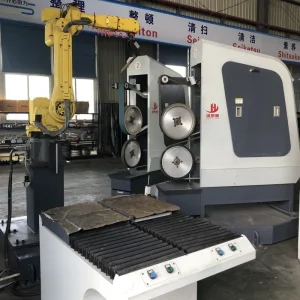
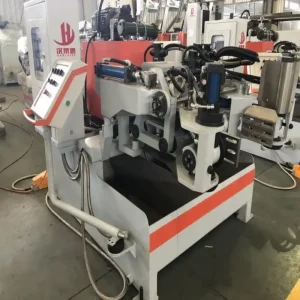
 Dingzhu auto