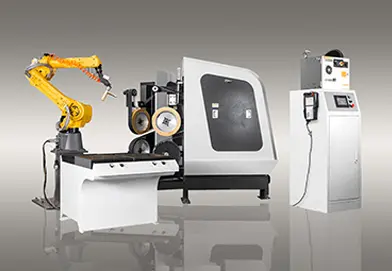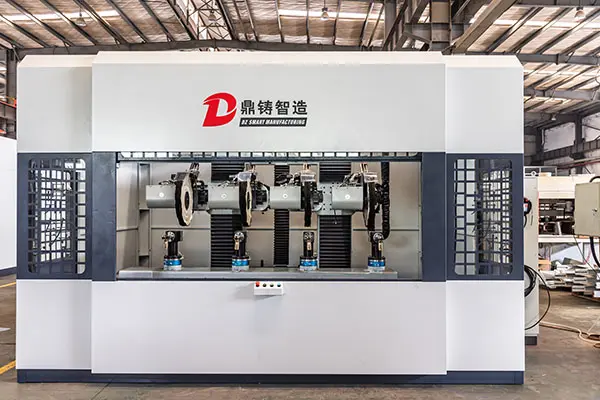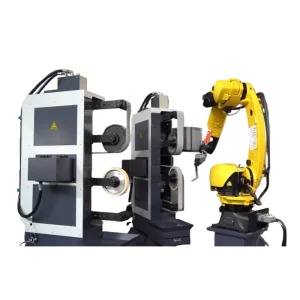
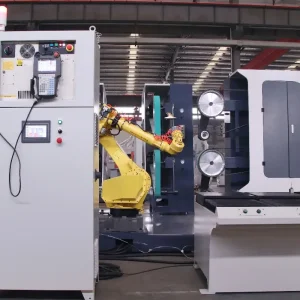
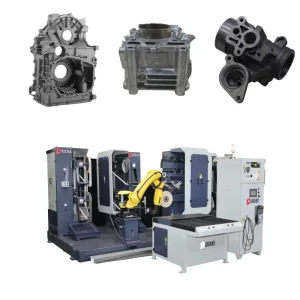
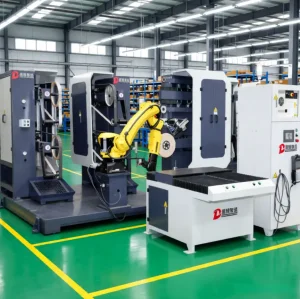
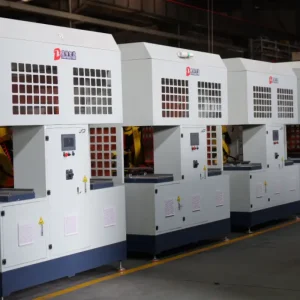
Across the global manufacturing landscape, post-casting and post-machining treatment—specifically the removal of burrs, flashings, gates, and parting lines—has transitioned from a labor-intensive chore to a highly controlled, digitized engineering process. ABB Robot Deburring Machines sit at the pinnacle of this revolution. High-precision manufacturing sectors in Europe, North America, and East Asia are aggressively phasing out manual fettling due to rising labor costs, severe occupational hazards (such as silicosis and vibration-induced injuries), and the demanding tolerances of modern automotive and aerospace assemblies.
Historically, deburring was the bottleneck of the foundry. Cast metals, including brass, copper alloys, high-strength aluminum, and cast irons, display unpredictable geometric variances from die-wear and thermal fluctuations during cooling. Rigorous industrial quality benchmarks now dictate that parts undergo force-controlled surface finishing. By leveraging multi-axis industrial robots integrated with dynamic compliance spindles and vision guides, manufacturers achieve unmatched repeatability and throughput, ensuring structural integrity while reducing surface defect scrap rates by up to 85%.
Utilizes closed-loop feedback systems that actively adapt tool pressure dynamically to changing component geometries and wear-profiles, protecting fragile tools and surfaces.
Seamlessly imports 3D model geometry directly into robotic simulation pipelines, cutting deployment downtime by translating virtual parameters into real-world trajectories.
Integrates spark-suppressed, vacuum-assisted exhaust hooding specifically designed to safely manage highly combustible fine aluminum and magnesium grinding particulates.
Founded in 2016, Xiamen DingZhu (DZ) Intelligent Equipment Co., Ltd. is a globally recognized manufacturer and exporter, principally engaged in the research, development, and engineering of automatic equipment for the foundry and finishing industries. Our machinery serves critical supply chains including plumbing hardware, sanitary fixtures, automotive components, and industrial valves.
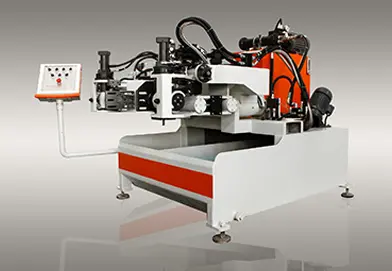
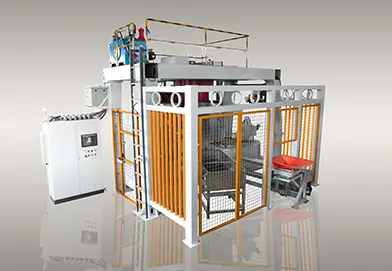
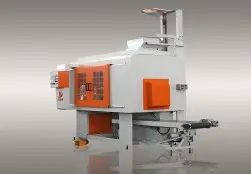
With years of hard-won industrial experience, DingZhu delivers turnkey manufacturing solutions encompassing automatic core shooting machines, gravity die casting machines, low-pressure die casting machines (LPDC), and custom-engineered robotic grinding and polishing cells. By blending advanced robotic controllers with our proprietary software compensation modules, we bridge the gap between heavy casting processes and high-precision finished products.

"Empowering foundries globally with optimized robotic automation solutions."
Static programming is no longer sufficient for complex castings. Modern robotic systems integrate structured light 3D vision cameras mounted on the robotic wrist or cell frame. These vision modules scan the parting lines of incoming castings in real-time, mapping dimensional deviations and automatically adjusting toolpaths. This ensures consistent gate and flash removal even on raw castings with high geometric variability.
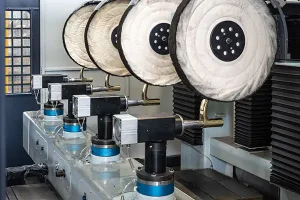
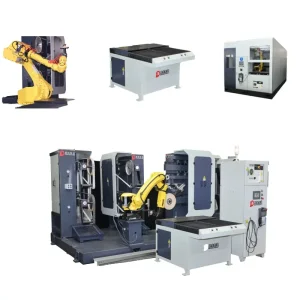
To achieve high efficiency, systems combine multiple finishing techniques within a single cell. The ABB robot manipulates the cast part, presenting it to a series of fixed stations, such as:
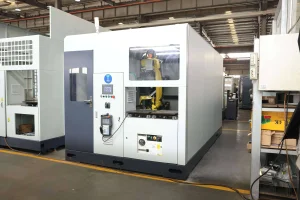
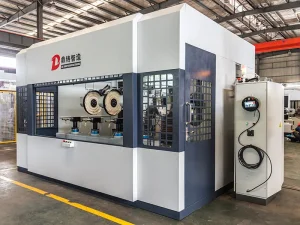
Environmental, health, and safety (EHS) compliance is a primary driver for automation. Modern deburring enclosures feature integrated acoustic insulation panels to keep noise below 75dB, along with customized high-vacuum extraction hoods. These capture toxic fine-dust particles right at the source, preventing worker exposure and minimizing explosive hazard risks.

Benefiting from 20 years of technology precipitation, our systems utilize mature, field-verified technical solutions. As a result, our equipment maintains an operational failure rate significantly below the industry average.

Our core engineering team has focused on casting, grinding, and polishing for over two decades. We provide complete lifecycle support, ranging from tool selection to custom-engineered process upgrades.

We maintain localized service centers in major manufacturing regions, including India, Egypt, Turkey, and Iran. We commit to a 24-hour on-site response time to minimize production downtime.

Standardized component warehouses at our overseas hubs cover over 80% of common wear parts. This ensures rapid replacement in emergencies, improving maintenance turnaround by up to 60%.
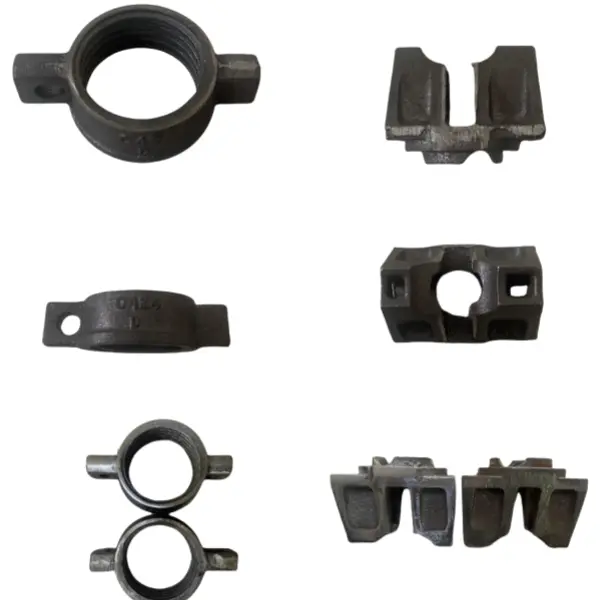
The expansion of electric vehicles requires thin-walled aluminum battery enclosures, motor housings, and structural chassis castings. These lightweight alloys require precise deburring to prevent stress concentration fractures. Our integrated cells process these complex geometries, ensuring consistent surface finishes and clean parting line profiles.
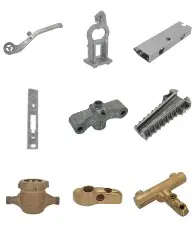
Brass and copper alloy plumbing castings require defect-free surfaces prior to electroplating or powder coating. Any remaining flash line or surface irregularity will become visible after plating. Our multi-axis polishing and grinding robots process intricate geometries, such as faucet bodies and valve seats, at high cycle speeds.
Industrial fluid controls rely on complex pump impellers and valve interiors to maintain design flow dynamics. Hand finishing inner flow channels is difficult and inconsistent. Our robotic arms program optimal tool entry angles, cleaning interior passages and complex curved surfaces to improve pump hydraulic efficiency.
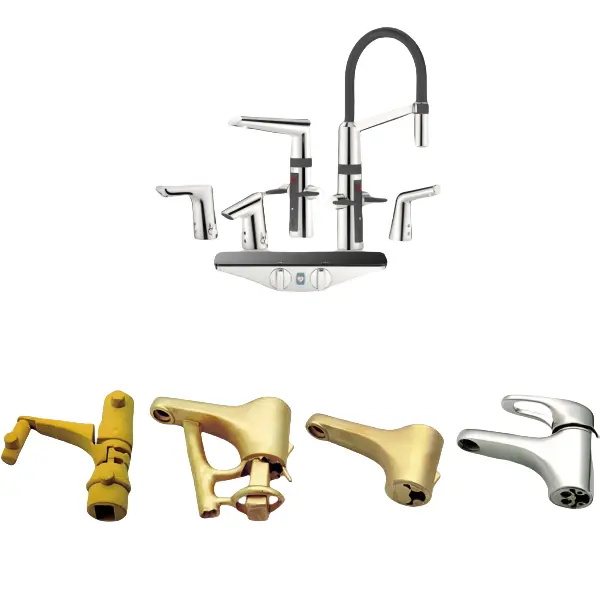
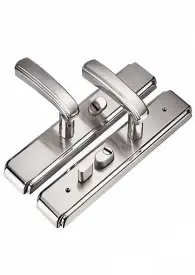
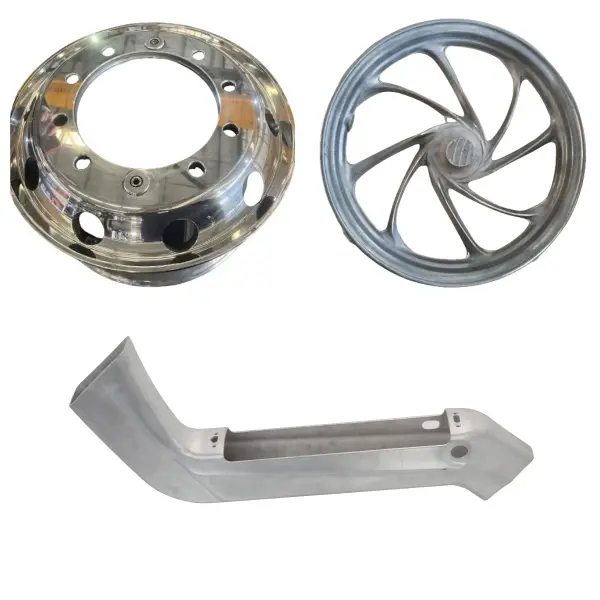
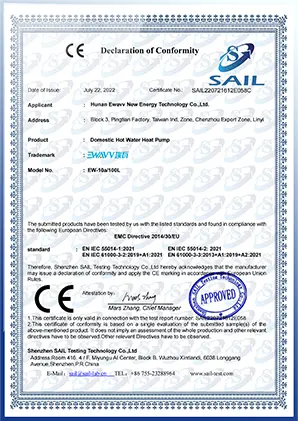
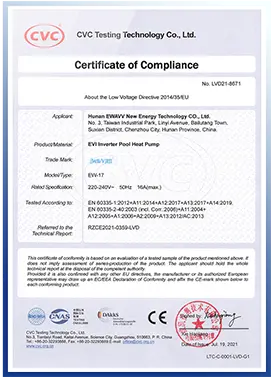
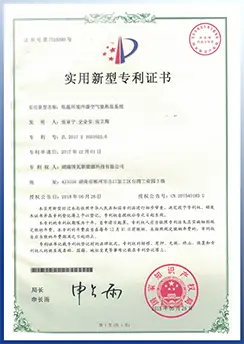
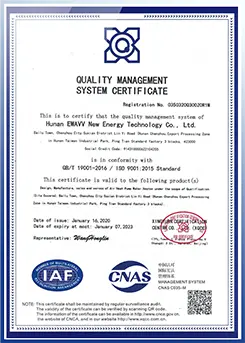
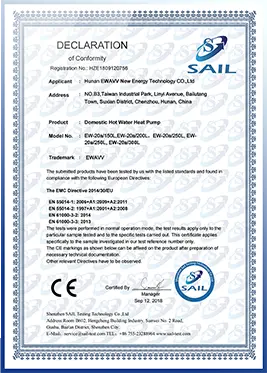
Our manufacturing operations adhere to international quality systems. This ensures every grinding and casting system delivered meets safety, structural, and performance standards.
Current abrasive belts and grinding wheels degrade during production. To maintain consistent surface quality, our system uses continuous torque monitoring. As the wheel wears, the robot path shifts incrementally, ensuring uniform pressure and depth-of-cut throughout the tool's lifespan.
We are integrating cloud-based monitoring to track cell performance metrics, spindle vibration, and cycle efficiencies. This data enables predictive maintenance, helping plant managers replace worn parts or dress tools before quality degradation or unplanned downtime occurs.
Our roadmap links automatic core molding and gravity die casting machinery directly with the robotic finishing cell. This creates a closed-loop casting line where downstream surface data is fed back to upstream machines to optimize casting parameters automatically.
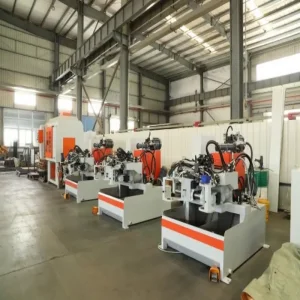
 Dingzhu auto