Engineered for cast iron, brass, aluminum alloy, zinc alloy, and ceramic industrial finishing.
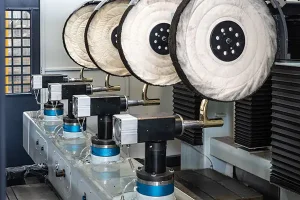
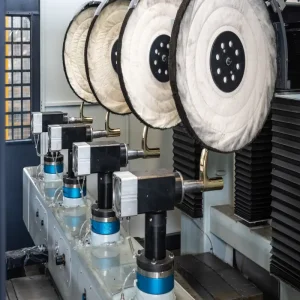
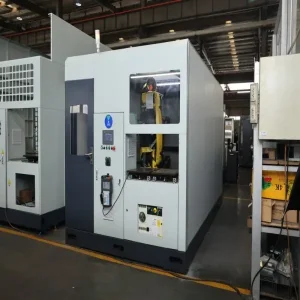
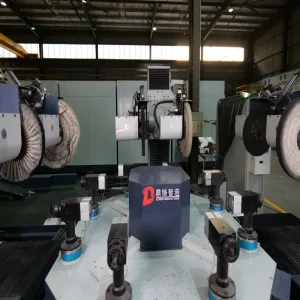
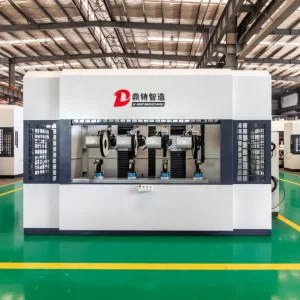
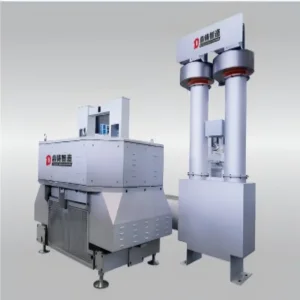
In the contemporary landscape of high-precision metal casting, automotive powertrain production, sanitary hardware fabrication, and aerospace engineering, the surface finishing stage has transitioned from a manual labor bottleneck to a pivotal driver of industrial profitability and quality control. Historically dominated by manual grinding, hand-held belt sanders, and uncalibrated pneumatic deburring tools, metal foundries have faced severe operational friction: high labor turnover, severe occupational health hazards (such as HAVS and silicosis from airborne dust), inconsistent edge geometry, and excessive scrap rates resulting from human fatigue.
As global manufacturing demands tighter dimensional tolerances, repeatable surface roughness ($Ra < 0.1 \mu m$ for mirror finishes), and total traceability, Robotic Grinding Solutions engineered by leading Chinese OEM manufacturers have emerged as the standard paradigm. By combining multi-axis articulated robot arms (ABB, KUKA, Fanuc) with active force-controlled compliant grinding heads, 3D laser vision trajectory mapping, and high-torque CNC grinding spindles, China's automation sector offers world-class capital efficiency, robust system integration, and end-to-end foundry intelligence.
Traditional rigid CNC grinding machines frequently fail when processing rough cast parts due to inherent casting dimensional variance ($\pm 1.5mm$ to $\pm 3.0mm$). Modern Chinese robotic grinding cells incorporate dynamic closed-loop force sensors that dynamically adjust tool position up to 1,000 times per second, guaranteeing uniform material removal without gouging or tool chatter regardless of raw casting fluctuations.
Xiamen DingZhu (DZ) Intelligent Equipment Co., Ltd was founded in 2016, building upon over two decades of deep technological precipitation in metallurgical equipment manufacturing. DZ specializes in the research, design, engineering, and global export of comprehensive foundry automation solutions—spanning automatic core shooting machinery, gravity die casting systems, automated Low Pressure Die Casting (LPDC) machines, and custom 6-axis robotic grinding and polishing cells.
By integrating hardware robustness with proprietary control algorithms, DZ intelligent automation cells serve tier-1 global vendors across plumbing hardware, sanitary fittings, automotive engine and chassis castings, industrial valve housings, and high-precision ceramic/metal components.


Decades of practical metallurgy experience backed by agile engineering, global field support, and robust component ecosystems.

20 years of continuous technological precipitation. Equipment utilizes market-verified structural designs and control routines, reducing failure rates significantly below the global industry average.

Our core R&D engineering team has focused exclusively on casting mold design, low-pressure casting, deburring, and robotic polishing for over 20 years, guiding clients from project selection to full process rollout.

Localized service hubs established across India, Egypt, Turkey, Iran, and Southeast Asia. We guarantee rapid technical dispatch and 24-hour on-site response commitments.

Standardized spare parts warehouses situated in key global hubs stock >80% of wearing items, enabling immediate "zero waiting" emergency replacement and boosting maintenance efficiency by 60%.
From heavy die-cast automotive blocks to high-sheen sanitary brassware, engineered for extreme duty cycles.
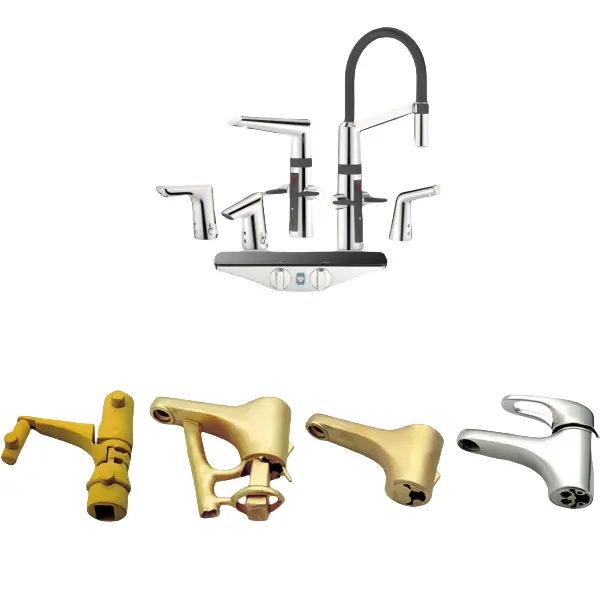
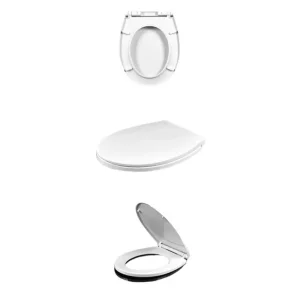
Automated parting line removal, gate grinding, and high-gloss buffing for brass, bronze, and zinc alloy faucets, shower heads, and valve bodies. Yields flawless PVD-ready mirror surfaces.
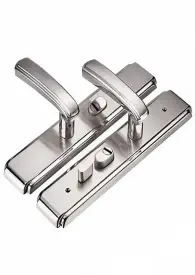
Multi-axis polishing systems specifically designed for intricate geometry: door handle panels, stainless steel hinges, lock housings, and decorative metal trims requiring uniform satin or chrome finishes.
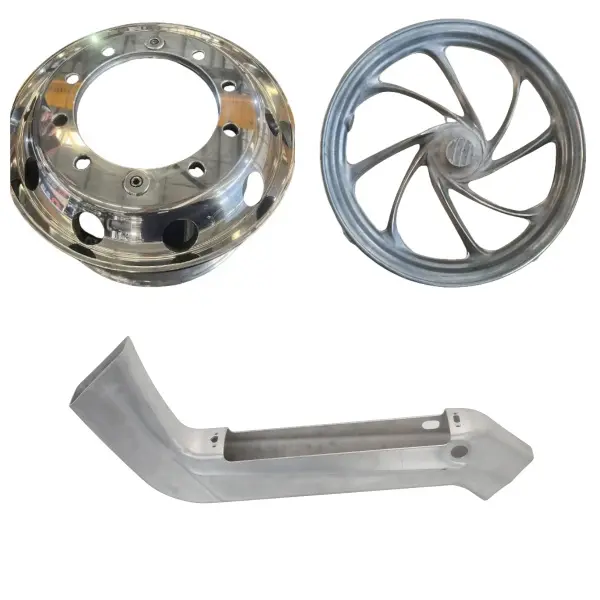
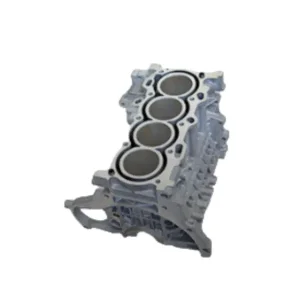
Heavy-duty deburring cells for aluminum engine blocks, transmission cases, steering knuckles, wheel hubs, and EV battery enclosures. Capable of handling rapid line speeds and heavy stock removal.
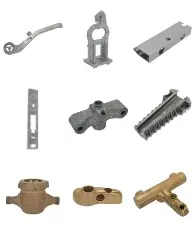
High-torque grinding robots designed to shear and grind thick sprue gates, flash lines, and riser stubs on gray iron, ductile iron, and steel castings prior to secondary machining.
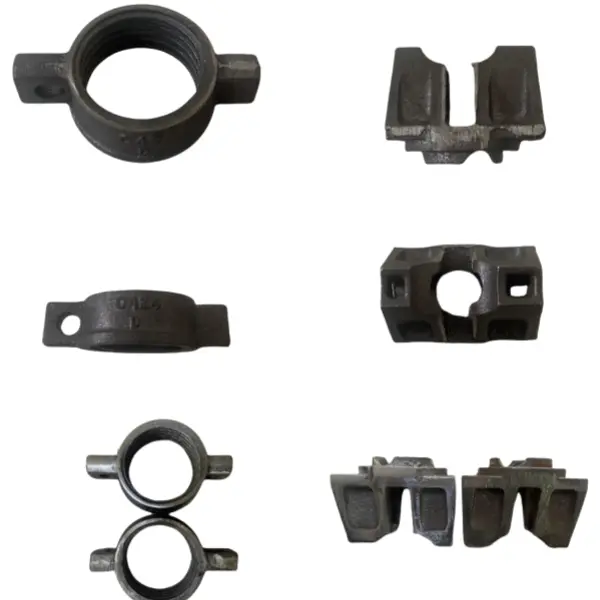
Sub-millimeter edge chamfering and surface smoothing for motorcycle crankcases, turbine impellers, pump housings, and aerospace grade titanium or aluminum components.
As Industry 4.0 paradigms evolve into Industry 5.0—where human intelligence works synchronously with autonomous robotic systems—the technical architecture of robotic grinding is undergoing a profound transformation. Xiamen DingZhu Intelligent Equipment is at the absolute forefront of this technological migration, investing heavily in five core engineering domains:
Integrating neural-network vision algorithms with 3D structured light scanners. The grinding cell scans raw castings in real-time, compares point clouds against original CAD models, and automatically generates optimized tool paths—eliminating manual teach-pendant programming for high-mix low-volume casting batches.
Next-generation 6-axis force-torque sensors coupled with pneumatic/servo constant-force actuators. By maintaining constant contact pressure ($N \pm 0.5$) over complex free-form surfaces, tool wear is minimized while surface finish consistency exceeds 99.8% across production lots.
Full virtual commissioning environments utilizing Siemens Process Simulate and RobotMaster. Enterprise buyers can simulate cycle times, collision hazards, wheel wear progression, and thermal deformation before a single metal plate is cut in our factory.
Modern grinding infrastructure requires complete dust mitigation. DZ cells integrate explosive-dust wet filtration systems (NFPA 484 compliant), acoustic dampening walls (<75 dB operating noise), and automated spark arrestors for magnesium and aluminum alloys.
Global procurement directors assessing robotic grinding platforms must evaluate not only machine specifications, but also the total ecosystem supporting system delivery, customization agility, and lifecycle operational expenditure (OPEX). China's industrial automation clusters—specifically located in Fujian's advanced equipment corridors—offer unmatched structural advantages:
When investing in automated robotic grinding and casting processing lines, global enterprises must conduct a thorough Total Cost of Ownership evaluation. Below is an analytical breakdown of how transitioning from manual work to a DZ Robotic Grinding Cell impacts financial and operational metrics:
| Evaluation Metric | Traditional Manual Grinding | DZ Automated Robotic Grinding Cell | Operational Impact |
|---|---|---|---|
| Shift Yield & Output Consistency | High variance; degrades as operator fatigue sets in | 100% constant cycle rate, 24/7 continuous operation | +250% to +400% daily throughput improvement |
| Scrap & Rework Rates | 5% – 12% due to gouging and edge over-grinding | < 0.3% with dynamic force feedback | Massive raw material savings & lower scrap costs |
| Abrasive Media Consumption | High tool wear due to uncontrolled manual pressure | Optimized force sensing extends abrasive life by 35-50% | Substantial recurring consumable cost reduction |
| Labor & EHS Risk Exposure | Severe liability (dust inhalation, vibration injuries, high turnover) | Zero operator exposure; fully enclosed safety enclosure | Eliminates occupational hazard claims & labor shortages |
| Capital Payback Period (ROI) | N/A (Ongoing operational expenditure leak) | Average 10 to 16 Months Return On Investment | Rapid EBITDA acceleration for enterprise foundries |
Deploying automated equipment into regulated markets across North America, Europe, the Middle East, and Asia requires total adherence to stringent electrical, mechanical, and environmental safety codes. Xiamen DingZhu Intelligent Equipment delivers complete international compliance compliance packages with every exported system:
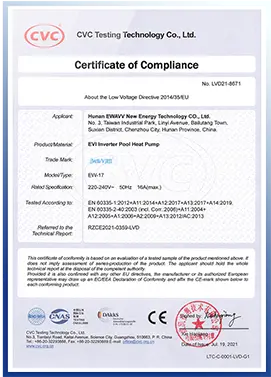
Full alignment with European Machinery Directive 2006/42/EC, Low Voltage Directive 2014/35/EU, and EN ISO 12100 risk assessment frameworks.
Integrated dual-channel safety circuits, light curtains, interlocked access doors, and emergency stop modules achieving Performance Level d/e (PLd/PLe).
Permanent service hubs in India, Egypt, Turkey, and Iran, providing rapid FAT/SAT assistance, operator training, and 24-hour engineer dispatch.
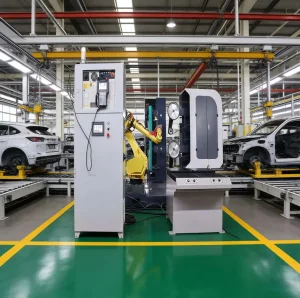
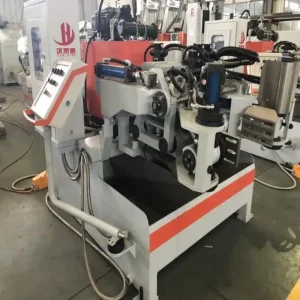
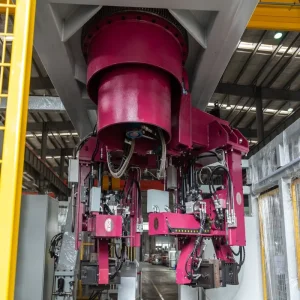
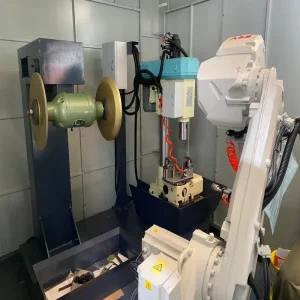
Explore our full engineering portfolio of heavy-duty casting and post-processing equipment.
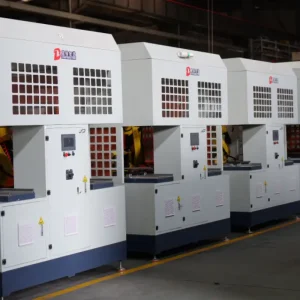
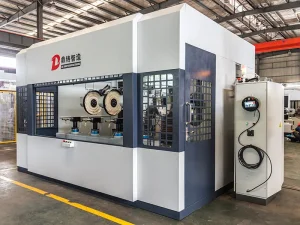
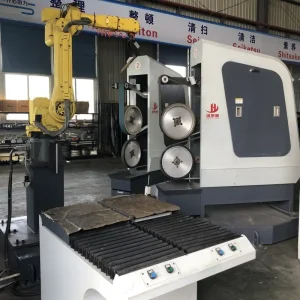
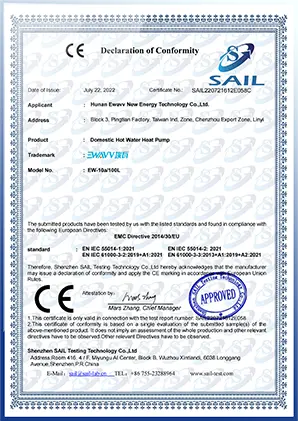
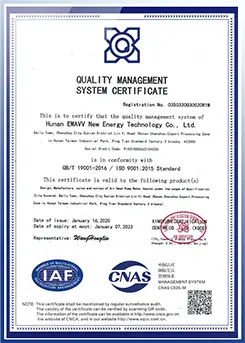
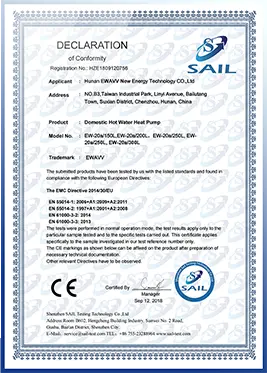
ISO 9001 certified manufacturing facility with international CE safety compliance.
Clear answers to strategic, technical, and integration questions for procurement engineers.
Let us optimize your production efficiency with exclusive equipment solutions to help you seize the dual high ground of quality and efficiency in the competition. Click below to consult with our Senior Automation Engineers.
 Dingzhu auto