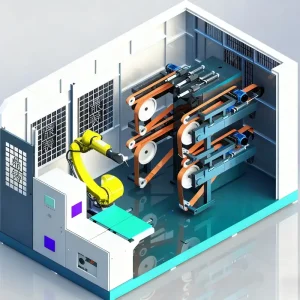
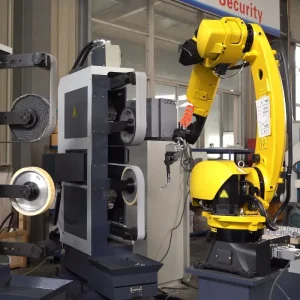
Cutting-edge automated solutions designed for heavy-duty metal casting, precise surface finishing, and robotic fettling processes.
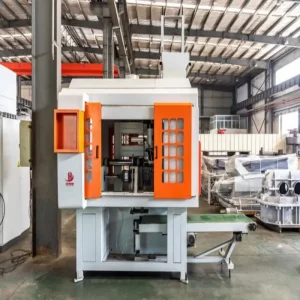
In the globalized automotive, sanitary ware, and high-pressure fluid control industries, the demand for metal components with high metallurgical density and zero gas-porosity defects has reached an all-time high. Gravity Fed Casting Machines (GDC), also known as permanent mold gravity casting systems, represent a critical technology vector to achieve these stringent requirements. Unlike High-Pressure Die Casting (HPDC), gravity casting relies purely on natural gravity to fill the steel molds (dies), preventing turbulence and subsequent gas entrapment during solidification.
Historically, gravity casting was highly labor-intensive and relied on manual tilt pouring. However, rising labor costs and the necessity for micro-level consistency have driven a global shift toward automation. Modern Chinese factories have pioneered the integration of servo-driven hydraulic tilting curves, robotic ladle pouring, and programmable Logic Control (PLC) systems to standardize solidification cycles. This tech advancement allows companies to secure massive production volumes with uniform material properties.
Non-turbulent cavity filling preserves the integrity of non-ferrous alloys, rendering components perfectly suited for high-pressure applications such as hydraulic valves and plumbing fixtures.
By eliminating high velocity impact erosion, gravity molds undergo less thermal fatigue, providing production life spans that exceed pressure-casting counterparts by up to 300%.
An in-depth look at the mechanical engineering and software systems that drive reliable casting throughput.
Our gravity casting machines utilize proportional flow valves controlled by Siemens or Omron PLCs. The machine tilts smoothly during pouring, shifting the molten flow velocity down to laminar flow levels, reducing oxidation and slag formation in the mold cavity.
Features embedded temperature sensor arrays within the mold blocks. Combined with water/air cooling bypass channels, the system automatically triggers cooling sequences to optimize eutectic solidification cycles.
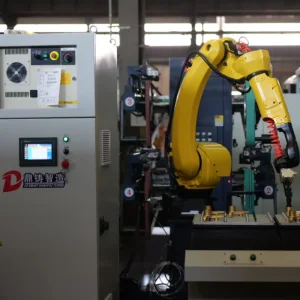
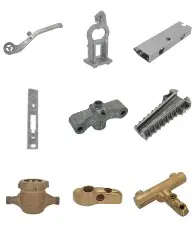
Designed with hydraulic slide core pulls and compatible with automatic robotic core-loading cells. It integrates with automatic sand core-shooting machines to manufacture complex internal geometries like water channels in high-grade brass faucets.
Molds are automatically heated to 150-250°C and sprayed with insulating coatings to ensure effortless casting release and control heat dissipation patterns.
Precise sand cores are inserted into the hot permanent mold cavity manually or via robotic arms to form complex internal hollow channels.
The system executes a custom pouring sequence, tilting the entire mold structure smoothly to prevent turbulent metal splashing.
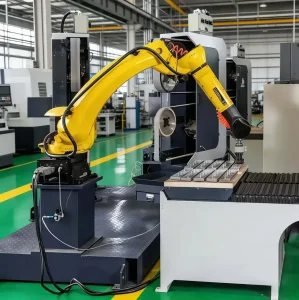
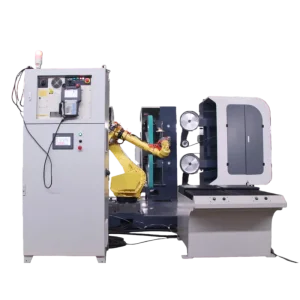
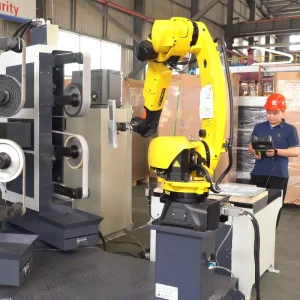
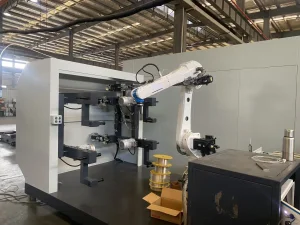
Hydraulic ejector pins release the solidified cast components, transferring them directly to deburring, grinding, and robotic polishing cells.

Xiamen DingZhu (DZ) Intelligent Equipment Co., Ltd was founded in 2016, and is principally engaged in the research, development, and manufacture of automatic equipment for the foundry industry used in plumbing hardware, sanitary fixtures, car spares, valves, and more. We provide automatic core shooting machines, gravity die casting machines, automatic Low Pressure Die Casting machines (LPDC), and robotic cell grinding and polishing systems.
By designing end-to-end lines from initial casting to post-cast surface polishing, DingZhu ensures that foundries achieve superior efficiency, lower rejection rates, and consistent part quality across multiple shifts. Our machinery utilizes top-grade mechanical, pneumatic, and electronic components to ensure stability under harsh foundry environments.
Read More About Us


How global industries rely on gravity die casting machines to satisfy regional standards and performance metrics.
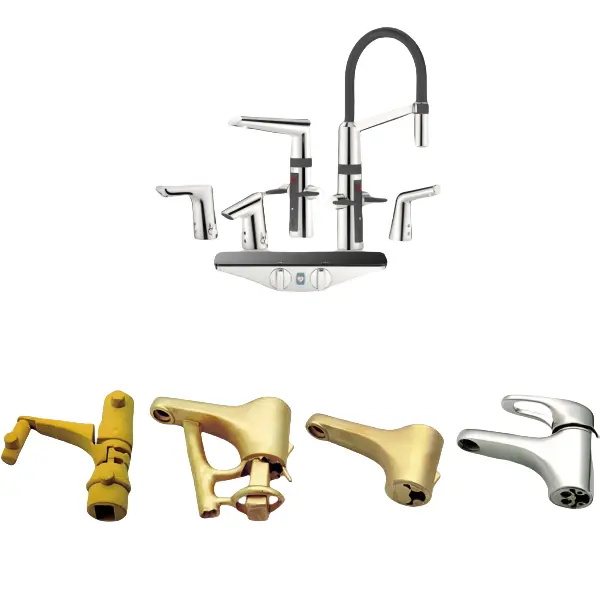
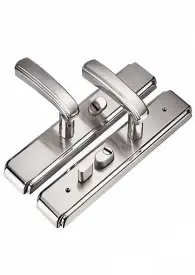
Plumbing brands require dense, thick-walled brass faucet bodies that prevent water leaks under high domestic water pressure. Furthermore, to achieve high-quality electroplating (chrome/nickel finishes), faucet surfaces must be completely free of micro-pores. Gravity fed casting machines deliver these structural requirements.
By integrating automated sand cores into the mold, complex internal plumbing channels are successfully formed, preventing structural wall thinning and ensuring long service life for sanitary products.
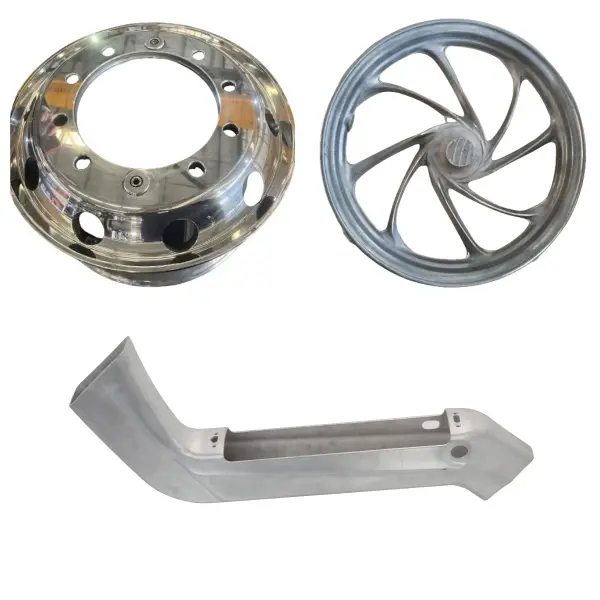
In the automotive sector, cylinder heads, engine blocks, turbocharger housings, and brake calipers require exceptional mechanical strength and thermal fatigue resistance. Permanent mold gravity die casting allows for rapid solidification, which refines the metal’s microstructure.
This refined microstructure results in superior tensile strength, ensuring that safety-critical automotive parts handle high thermal stresses and repetitive vibration loads.
Why sourcing from DingZhu offers superior cost efficiency, technology integration, and component reliability.

Benefiting from 20 years of technology precipitation, our systems adopt market-verified technical configurations, keeping the failure rate significantly below the industrial average.

Our core engineering team has focused on casting, grinding, and polishing automation for over 20 years, providing complete process upgrades from selection to deployment.

Localized service outlets are fully established in India, Egypt, Turkey, and Iran, guaranteeing on-site technical response and engineering intervention within 24 hours.

Standardized components warehouses in our overseas outlets cover over 80% of wearing parts, enabling zero-waiting emergency replacements and boosting maintenance efficiency by 60%.
China’s heavy industry ecosystem relies on consolidated industrial clusters. The supply chain for casting equipment components (such as heavy-duty hydraulic cylinders, customized casting molds, and advanced PLC panels) is physically concentrated within specific regional hubs. For instance, Xiamen DingZhu leverages local manufacturing hubs to access high-grade raw metals, specialized heat-treating services, and world-class mechanical processing centers.
This physical proximity significantly reduces lead times for complex custom casting equipment. When international clients request custom modifications for their specific mold sizing or metal flow dynamics, our design-to-build iteration loop takes weeks, compared to months in other regions. This cluster efficiency directly benefits our customers, delivering shorter lead times, lower transport costs, and robust quality control.
The evolution of gravity casting from manual machines to fully autonomous casting centers.
Integrating machine-learning cameras to monitor molten metal streams in real-time. System controls adaptively adjust the tilt speed based on stream thickness, temperature fluctuations, and cavity pressure indicators.
By monitoring motor currents and hydraulic pressures, IoT platforms identify micro-wear on guide rails and hydraulic seals, scheduling preventive maintenance before component failures occur.
Integrating sand-shooting machines directly with closed-loop sand recovery systems. Used sand cores are crushed, thermal-reclaimed, and fed back into core production, reducing foundry environmental impact.
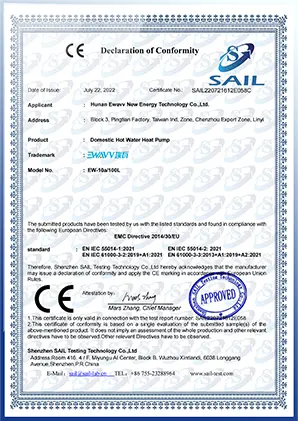
Ensuring compliance with international machinery safety codes, electrical guidelines, and quality assurance frameworks.


Addressing the technical, operational, and financial questions of foundry managers and manufacturing directors.
In Gravity Die Casting, molten metal is poured from a ladle into a mold using gravity to fill the cavity. In LPDC, the molten metal is forced upward into the mold from a pressurized crucible below, using low-pressure air. GDC machines are mechanically simpler, cost less, and offer high flexibility for fast changeovers. LPDC is highly automated and suited for larger, symmetrical castings like aluminum wheels.
Manual pouring relies heavily on operator skill. Variances in pouring speed create turbulent flow, causing air bubbles and oxide inclusions in the casting. Automated tilt casting machines tilt at a controlled angle and rate, maintaining a laminar flow of metal into the mold. This controls the fill speed, stabilizes solidification, and reduces defect rates below 2%.
GDC is highly suited for non-ferrous alloys with lower melting points. This includes aluminum alloys (such as A356, A380, and Al-Si-Mg series) and copper-based alloys (including brass, lead-free brass, and bronze). These materials flow easily under gravity, solidify quickly in steel dies, and yield a clean surface finish suitable for chrome plating.
Mold life depends heavily on the alloy temperature and the thermal coating used. For aluminum casting, a high-quality H13 tool steel die typically lasts between 80,000 to 150,000 shots. For brass casting, which operates at higher temperatures (approx. 1000°C), die life ranges from 30,000 to 60,000 shots before wear or thermal cracking requires tool refurbishing.
Yes. Our gravity casting machines feature standard Profinet, Ethernet/IP, and Modbus TCP communication interfaces. They easily connect with robotic arms from Kuka, ABB, Fanuc, or Yaskawa for automated metal pouring, sand core setting, and finished part extraction, forming a fully automated casting cell.
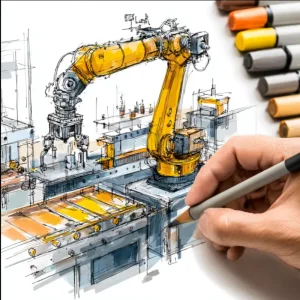
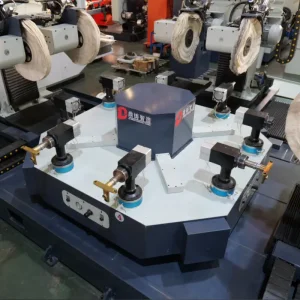
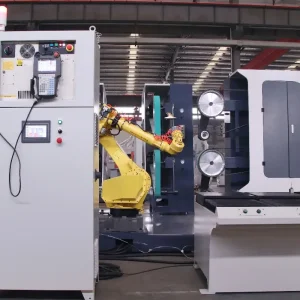
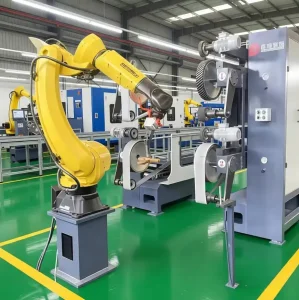
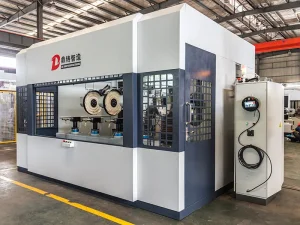
Complete post-cast processing machinery designed for mirror-finish grinding, deburring, and high-efficiency manufacturing.
Let us optimize your production efficiency with customized equipment solutions, helping you lead in both casting quality and output speed. Connect with our engineering directors for a detailed mold layout review and equipment quotation.
Query Project Quotation Now Dingzhu auto