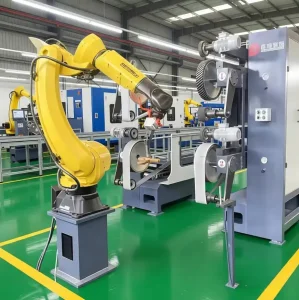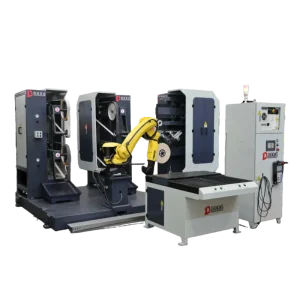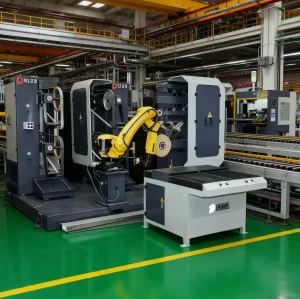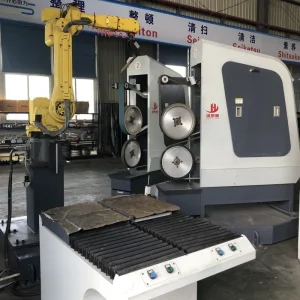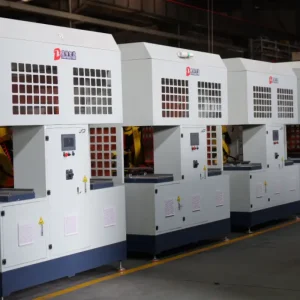
In the modern manufacturing landscape, the shift from traditional manual grinding to collaborative robotic systems represents a paradigm shift in quality control and worker safety. A Collaborative Grinding Robot Machine with Servo Control is not merely a mechanical arm; it is a sophisticated fusion of force-sensing technology, real-time data processing, and high-precision motion control. As a leading China manufacturer, we understand that "Surface Finishing" is often the most labor-intensive and error-prone stage of production.
This technological leap addresses the "Search Intent" of global procurement managers who are looking for more than just a machine—they are looking for a solution to labor shortages, rising costs, and the need for micron-level consistency in industries such as aerospace, automotive, and high-end sanitary hardware.

Founded in 2016, Xiamen DingZhu(DZ) Intelligent Equipment Co.,Ltd has emerged as a powerhouse in the research, development, and manufacture of automatic equipment for the foundry industry. Our expertise spans across plumbing hardware, sanitary ware, automotive spares, and valve manufacturing. We specialize in providing comprehensive solutions including:
Our mission is to bridge the gap between traditional craftsmanship and digital manufacturing, ensuring every metal component achieves a mirror-like finish with zero defects.

With 20 years of precipitation, our equipment integrates mature technical solutions verified by the rigorous Chinese manufacturing market. Our failure rates are consistently 30% lower than industry averages.

Our core team consists of Ph.D. level robotics experts and veteran foundry engineers. We provide full-cycle support from initial selection to complex process upgrading.

We maintain standardized parts warehouses in India, Egypt, Turkey, and Iran. This "Zero Waiting" strategy improves maintenance efficiency by over 60% compared to European competitors.
Precision Engineering: At the heart of our collaborative grinding robot is the multi-axis servo control system. Unlike hydraulic or pneumatic systems, servo control allows for infinitely variable speed and torque management. This is critical when grinding complex geometries like faucet curves or automotive engine blocks.
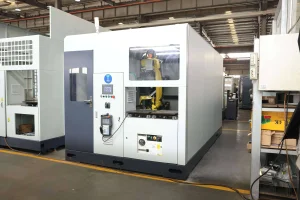
Safe Collaboration: These robots are designed with internal sensors that detect human proximity and impact. This eliminates the need for massive safety cages, allowing the machine to work side-by-side with human operators, optimizing floor space and workflow.
AI Integration: Our latest generation uses machine learning to predict abrasive wear. The system automatically adjusts the feed rate as the grinding belt wears down, ensuring that the first part of the day looks identical to the 1,000th part.
Energy Efficiency: Servo-driven robots consume up to 40% less power than traditional automated grinders by only drawing current when movement or force is required.
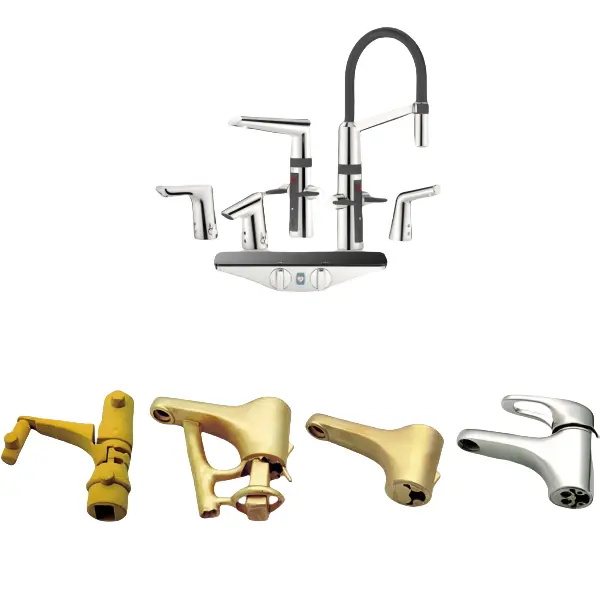
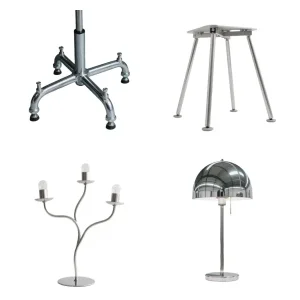
Perfect for faucets and valve bodies where aesthetic mirror finishes are mandatory.
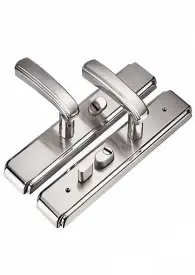
Handling complex handles and panels with consistent high-gloss polishing.
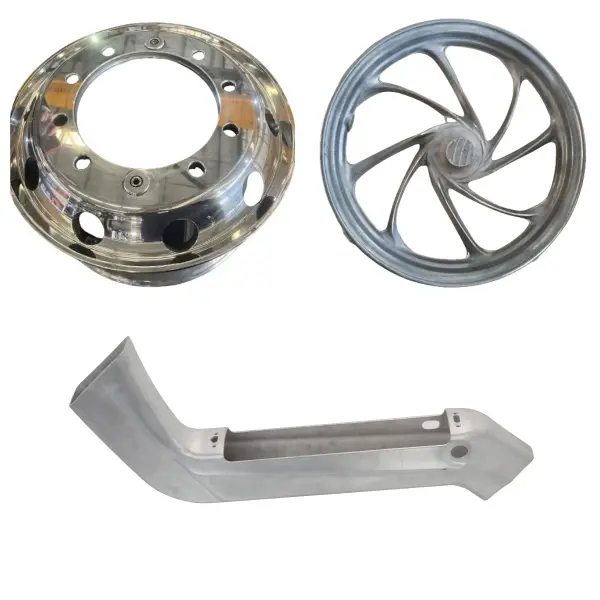
Deburring engine casings and alloy wheels to meet strict safety standards.
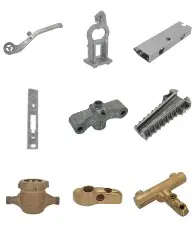
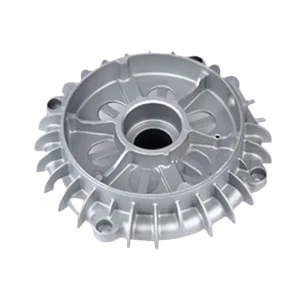
Removing heavy gates and risers from zinc and brass castings with ease.
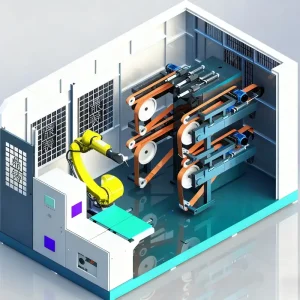
For global enterprises, the decision to invest in a Collaborative Grinding Robot is driven by ROI. Our macro-level solutions include the integration of the "Digital Twin" concept—where we simulate your entire production line before a single bolt is installed. This reduces commissioning time by 50%.
We source our servo motors and controllers from world-class Tier-1 suppliers, ensuring that spare parts are available globally, not just in China.
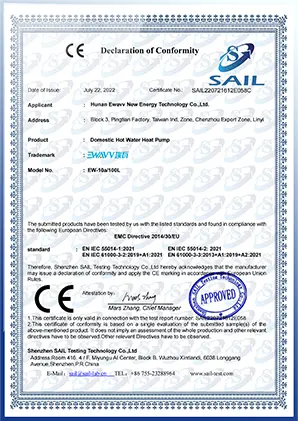
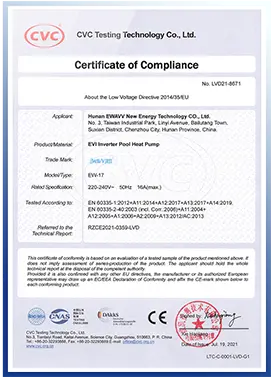
All units are CE certified and meet ISO 10218-1/2 standards for collaborative robot safety, satisfying the stringent requirements of EU and US markets.
Automated grinding significantly reduces dust emissions and improves air quality in factories, aligning with modern Green Manufacturing initiatives.
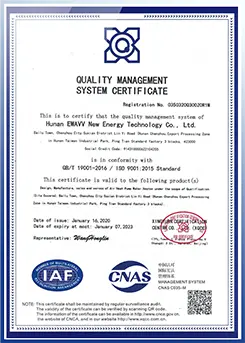
Join 80+ countries and thousands of factories in the robotic revolution. Get a customized quote for your facility today.
Query Project Quotation & Technical Audit Dingzhu auto