The Cnc Polishing Machine Market Size is drawing attention as manufacturers seek smoother finishes, consistent dimensions, and more predictable production. CNC polishing machines use programmed motion to guide polishing tools across metal, glass, ceramics, and other materials. In a typical workshop, that can mean a controlled pass over a stainless-steel component instead of repeated manual corrections. The practical appeal is clear. Repeatability matters.
Demand is supported by tighter quality expectations, complex part geometries, and pressure to reduce finishing time. Automated polishing can also help shops handle recurring orders with less variation between operators. These benefits are relevant in automotive, aerospace, medical-device, and electronics manufacturing, though requirements differ across applications. A machine suitable for a broad panel may not suit a delicate optical surface. Details matter.
Market growth is not guaranteed for every buyer. Equipment price, programming expertise, maintenance, and integration with existing production lines can influence adoption. Some smaller workshops may find manual finishing more economical for low-volume work. That is worth noting. Market estimates also vary depending on whether reports count polishing centers alone or include related automation and finishing systems. A careful assessment should distinguish installed demand from announced investment. The strongest explanation for rising market interest is therefore practical, not speculative: manufacturers are weighing surface quality, throughput, and labor needs against the cost of automation. The balance is still changing.
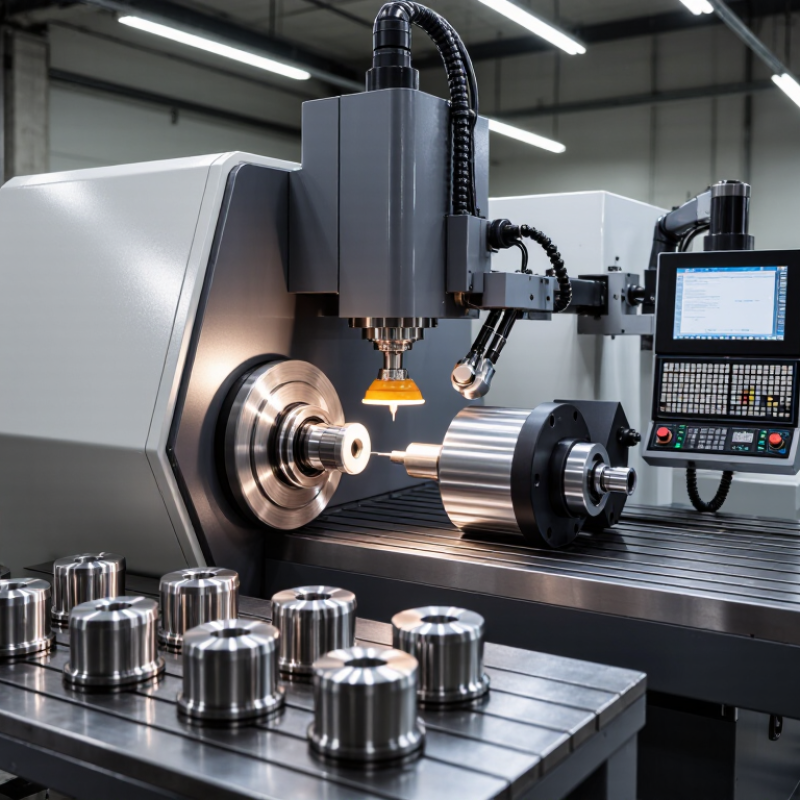
Defining the CNC Polishing Machine Market and Its Role in Precision Finishing
The CNC polishing machine market covers computer-controlled equipment used to refine surfaces through abrasion, buffing, or related finishing processes. Its role is to deliver a more consistent surface across repeated parts, while allowing operators to set polishing paths and process parameters. That distinction matters. A programmed machine can help reduce variation caused by hand movements, especially on components with curved or intricate surfaces. It does not remove the need for skilled setup.
In practice, a polishing head follows a defined route across a metal or ceramic workpiece, removing fine marks and improving surface appearance. Some systems also support controlled pressure and repeatable cycle settings. These capabilities make CNC polishing relevant to manufacturers seeking predictable finishing and less manual rework. The market is expanding as precision components become more common and production teams look for repeatable processes. Still, automation is not a perfect shortcut. Tool wear, part geometry, and polishing compound can all affect the result. A machine may follow its program precisely and still produce an uneven finish if those factors are overlooked. For buyers, evaluating the complete finishing process matters as much as comparing machine specifications.
Automation Demand: IFR Reports 4.28 Million Industrial Robots in Operation in 2023
The CNC polishing machine market is expanding as manufacturers seek more consistent finishing with less manual handling. The International Federation of Robotics reported 4.28 million industrial robots in operation worldwide in 2023. That matters. A larger installed robot base gives factories more experience connecting automated cells with machining and finishing tasks. Polishing can follow cutting, where edges, surface marks, and dimensional tolerances need careful attention.
A robot-guided polishing cell can maintain a planned path across a metal part while controlling contact pressure and movement. This is useful for repeated components, such as machined housings or curved panels, where uneven hand pressure may leave visible differences. CNC control also helps operators repeat a process after changing tools or part geometry. Still, more robots do not automatically mean more polishing machines. Some factories use robots for welding, handling, or inspection instead. The relevant signal is broader: automation is becoming familiar, and that can reduce hesitation around automating finishing work. There are trade-offs. Abrasive wear, dust extraction, and part-to-part variation still require monitoring, and setup can take time. A polished surface is not simply a programmed path.
Why Is the CNC Polishing Machine Market Size Increasing? — Automation Demand: 4.28 Million Industrial Robots in Operation in 2023
| Data Dimension |
Reported 2023 Figure |
What the Data Indicates |
Relevance to CNC Polishing Automation |
| Industrial robots in operation worldwide |
4,281,585 units |
The global operational stock of industrial robots reached approximately 4.28 million in 2023. |
A large installed base reflects broad adoption of industrial automation. Robotic systems can support repeatable polishing workflows when integrated with suitable CNC equipment and process controls. |
| Year-on-year growth in operational stock |
Approximately 10% growth |
The worldwide operational stock increased by about 10% compared with 2022. |
Continued growth in automation provides a wider context for investment in automated finishing processes; this figure is not specific to polishing machines. |
| New industrial robot installations |
541,302 units |
More than half a million industrial robots were installed worldwide during 2023. |
New automation deployments can create opportunities for connected production equipment, including CNC-based surface-finishing systems. |
| Change in annual installations |
Approximately 2% decrease from 2022 |
Annual installations dipped slightly in 2023 even as the total number of robots in operation continued to grow. |
This distinguishes the expanding installed base from short-term annual demand and avoids treating robot installations as a direct measure of CNC polishing machine sales. |
| Regional distribution of installations |
Asia: approximately 70%
Europe: approximately 17%
Americas: approximately 10% |
Asia accounted for the largest share of industrial robot installations in 2023. Percentages are rounded. |
Regional automation activity can help indicate where demand for automated manufacturing and finishing capabilities may be concentrated. |
Source: International Federation of Robotics (IFR), World Robotics 2024. Figures describe industrial robots overall, not CNC polishing machines or the CNC polishing machine market size. The market relevance statements are contextual interpretations, not reported market measurements.
Automotive Growth: Global Vehicle Production Reached 93.5 Million in 2023
Why Is the CNC Polishing Machine Market Size Increasing?
Global vehicle production reached about 93.5 million units in 2023, according to industry production data. More vehicles mean more components that need consistent surface finishing. Think of metal trim, wheel parts, and other formed components moving through a busy workshop. Each part must meet defined appearance and dimensional requirements. CNC polishing machines can repeat programmed paths across batches, helping manufacturers manage this demand with less variation. Smooth finishes matter. They can also reduce uneven rework, though results depend on tooling, part shape, and process settings.
Tips: Before choosing a polishing cycle, test it on the actual material and geometry. Check the finish under consistent lighting. Small details count.
The link between vehicle output and machine demand is real, but it is not automatic. Production growth can encourage investment in faster, more repeatable finishing, especially where many similar parts are processed. Yet a machine must suit the workload. A complex part may need careful setup, and a poor process can still leave marks or waste time. Buyers should compare cycle time, changeover needs, and finish quality using representative parts. The market is growing, but not every shop needs the same level of automation.
Market Outlook: How Quality, Productivity, and Automation Shape Adoption
CNC polishing machines are gaining attention because manufacturers need repeatable surface quality, not just faster cutting. A polished component may need a uniform finish around edges, bores, or curved faces, where hand work can vary between shifts. Automated tool paths help control contact pressure and polishing time. That can reduce rework and make inspection results more predictable.
Consistency matters. In sectors such as automotive, aerospace, and medical manufacturing, surface defects can affect fit, cleaning, or component life. CNC systems can store process settings for recurring jobs, while sensors and programmed motion help operators manage complex surfaces. Productivity also improves when polishing is integrated into a wider production cell. Less manual handling means fewer pauses between machining and finishing. Small gains add up.
There is a catch. Fixtures, programming, abrasives, and operator training all require investment, and different materials respond differently to polishing. Automation is not magic. A machine may repeat a poor setup very reliably. Manufacturers still need suitable inspection methods and skilled staff who can adjust recipes when a part changes. The market outlook is strongest where buyers can connect measurable finish quality with lower rework and steady throughput, rather than purchasing automation for its own sake.
Conclusion
The Cnc Polishing Machine Market Size is increasing as manufacturers seek consistent, high-quality finishes with greater efficiency. CNC polishing machines automate precision-finishing tasks, helping reduce variation between parts and support demanding production requirements. Surface quality is also easier to assess against shared measurement standards: ISO 21920 provides a framework for defining and measuring surface texture, making finish specifications clearer across manufacturing processes.
Growing automation and production volumes add to demand. The International Federation of Robotics reported 4.28 million industrial robots in operation worldwide in 2023, reflecting the broader shift toward automated manufacturing. Meanwhile, global vehicle production reached 93.5 million units that year, sustaining the need for reliable finishing of components. Looking ahead, quality expectations, productivity goals, and increasing automation are likely to shape adoption, as manufacturers weigh the value of improved repeatability and throughput against their production needs.

 Dingzhu auto