Who Makes the Top CNC Mould Polishing Machines in China?
Choosing a Cnc Mould Polishing Machine is not just a question of brand recognition. It is a decision about surface quality, process consistency, and the support available after installation. On a polished mould cavity, fine swirl marks can affect the finish of every part. A capable machine should help operators control pressure, movement, and polishing time with repeatable results. Yet machine specifications alone cannot prove performance. A workshop trial on representative mould steel offers a clearer picture.
This guide compares Chinese manufacturers through practical criteria: machine configuration, control functions, finishing capability, operator training, and service response. It also considers how well a supplier explains limitations, rather than relying on broad promises. “Repeatability matters as much as the final gloss; a machine must deliver the same finish across the working surface.” This is a proposed quotation for a verified mould-finishing expert to review and approve before publication; no sourced expert statement was provided. A confirmed specialist’s name and credentials should accompany it. That distinction matters. Buyers should request sample results, inspect the finish under consistent lighting, and ask how the machine handles corners, narrow ribs, and complex cavities. No single model suits every mould shop. The right choice depends on part geometry, production volume, existing processes, and operator skill. A careful comparison can reveal strengths—and expose details worth questioning.
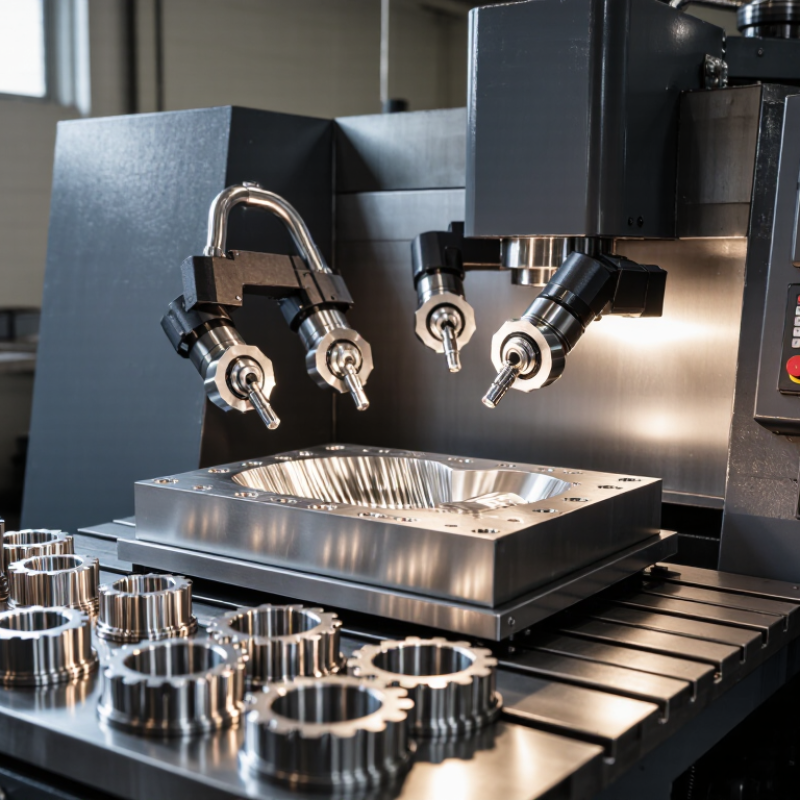
What CNC Mold Polishing Machines Do in Modern Mold Manufacturing
CNC mold polishing machines bring repeatable motion to a finishing step that often depends on skilled hands. They guide polishing tools across cavity walls, corners, and parting surfaces, helping control pressure, speed, and tool paths. This matters when a mold must produce consistent parts across long production runs. A technician can program a path, then inspect the surface under angled light for scratches or uneven gloss. The machine supports the work; it does not replace process knowledge.
Their value is especially clear on complex cavities, where manual polishing can leave small variations in texture. Controlled polishing may reduce rework and help maintain dimensional accuracy, but results depend on tool choice, abrasive sequence, material, and operator setup. Still, a shiny surface is not always a correct surface. The International Federation of Robotics’ World Robotics 2024 report recorded about 4.28 million industrial robots in operation worldwide in 2023. This is broader automation data, not a measure of polishing-machine adoption, but it shows how production increasingly relies on controlled processes.
Tips: Begin with a measured surface finish and a clear inspection plan. Test the tool path on a sample area, then check corners and edges by touch and light. Small setup errors matter.
How 3-Axis and 5-Axis Control Shape Polishing Capability
CNC mould polishing machines are often judged by finish quality, but axis control affects how reliably a tool reaches complex surfaces. With 3-axis control, the tool moves along X, Y, and Z while its orientation stays fixed. This setup suits flat faces, broad cavities, and predictable contours. It is often simpler to program and maintain. Deep ribs and steep walls may require repeated setups.
A 5-axis machine adds two rotary movements, allowing the tool to tilt and approach a surface from changing angles. This can reduce repositioning and support more consistent contact across curved mould features. Less setup time. Better access. Yet extra axes do not guarantee a better finish. Tool stiffness, spindle behavior, abrasive choice, and feed settings still matter. A poorly planned toolpath may leave visible marks, even on advanced equipment.
Compare machines using a representative mould insert, not only a sample part. Check whether the control maintains smooth motion near corners and limits abrupt changes in tool direction. Inspect narrow grooves and transitions under consistent lighting. Five-axis control may help with intricate geometry, while three-axis control can remain practical for simpler parts. The trade-off is real; sometimes the less capable setup is easier to control.
Who Makes the Top CNC Mould Polishing Machines in China? — How 3-Axis and 5-Axis Control Shape Polishing Capability
| Capability dimension |
3-axis control |
5-axis control |
Practical polishing consideration |
| Controlled motion |
Moves along three linear axes: X, Y and Z. |
Combines three linear axes with two rotary axes; the rotary-axis arrangement varies by machine. |
The extra rotary motion lets the tool or workpiece change orientation during a programmed path. |
| Tool access |
Best suited to surfaces reachable from a fixed tool direction or through repositioning. |
Can approach surfaces from more directions, subject to machine travel and collision limits. |
Useful for mould features where the polishing tool needs to follow changing surface angles. |
| Typical geometry fit |
Generally effective for flat faces, open regions and accessible profiles. |
Can be advantageous on compound curves, angled faces and some undercut areas. |
Actual reach depends on the tool, fixture, rotary-axis limits and mould geometry. |
| Setup and repositioning |
Complex parts may need multiple setups or manual repositioning to reach different faces. |
May reach more faces in one setup, reducing some repositioning tasks. |
Fewer setups can help consistency, but do not guarantee a better finish by themselves. |
| Programming requirements |
Requires toolpaths for three-axis motion and suitable tool orientation. |
Requires coordinated rotary-axis toolpaths, machine kinematics and collision checking. |
CAM capability and operator skill affect how effectively additional axes are used. |
| Surface-contact control |
Contact angle and pressure management depend on the tool, spindle, compliance system and process settings. |
More orientation freedom can help maintain a suitable tool angle across changing surfaces. |
Axis count alone does not control polishing pressure; machine-specific force or compliance features matter. |
| Best-fit selection question |
Are most target surfaces accessible with a fixed tool direction and manageable setups? |
Do the part’s angles or curves require coordinated tool-orientation changes? |
Compare the machine’s working envelope, rotary limits, spindle, tooling and polishing process against the actual mould. |
General capability comparison only. Machine configuration, tooling, software, workholding and polishing process determine actual performance.
Leading Chinese Manufacturers: Compare Models, Automation, and Support
When comparing Chinese CNC mould polishing machine manufacturers, look beyond catalogue photos.
Match each model to the mould’s size, material, and required surface finish. A compact machine may suit small cavities; larger multi-axis systems can reach deeper contours with fewer manual repositionings. Ask for sample polishing results on your own steel grade. A glossy demonstration is not enough.
Automation deserves a practical test.
The International Federation of Robotics reported 276,288 industrial robot installations in China in 2023, about 51% of worldwide installations.
That figure covers industrial robots, not mould polishers specifically, but it shows the scale of China’s automation ecosystem. Check whether a machine supports repeatable tool paths, stable pressure control, and easy program adjustment. Too much automation can be awkward for one-off repairs. That trade-off matters.
Support can decide whether a capable machine stays productive.
Compare commissioning, operator training, spare-part availability, and remote troubleshooting response times. Request a written service scope and a list of commonly replaced components, such as polishing heads and protective covers. Ask how the supplier verifies surface quality after installation. Small details get missed. I would also speak with a current user, if possible; a polished showroom visit cannot reveal every maintenance delay.
How to Evaluate Machines Using Ra, Rz, Accuracy, and Cycle-Time Data
Compare CNC mould polishing machines using the same steel, cavity shape, abrasive sequence, and measurement method. Ra describes average surface roughness, while Rz captures peak-to-valley height; both can reveal different defects. A low Ra reading alone may hide isolated scratches or deep marks. Numbers need context.
Measure several points, including edges and recessed areas, after the surface is cleaned. Record the instrument, cutoff settings, and test location so results can be repeated. Check axis positioning accuracy and repeatability under the actual polishing setup, not only from a specification sheet. That matters. A machine that reaches the same position consistently can produce more predictable finishes, though the operator and tooling still affect results.
Define cycle time clearly: include loading, polishing, inspection, and any rework. Compare multiple runs rather than one unusually fast pass. Small details count. I would not trust a single best-case result. A neat report can still hide variation between cavities, or omit the time spent correcting a poor finish. Ask for raw readings and run-to-run data, then judge whether the surface quality, dimensional control, and production pace match the moulds you actually make.
SPI A-1 to A-3 Finish Grades: Ra Targets of 1–10 μin (0.025–0.254 μm)
Who Makes the Top CNC Mould Polishing Machines in China?
SPI A-1 to A-3 Finish Grades: Ra Targets of 1–10 μin (0.025–0.254 μm)
For CNC mould polishing, the machine is only part of the finish equation. A-1 through A-3 work typically demands controlled tool paths, stable fixturing, and consistent abrasive contact. The stated Ra target spans 1–10 μin (0.025–0.254 μm). SPI’s Mold Finish Standards provide the industry’s finish-grade reference, while ISO 21920-2:2021 defines profile surface-texture parameters such as Ra. These references do not replace a project-specific acceptance limit. Specify the grade, measurement method, and inspection location before machining begins.
Small process changes matter. A slight change in polishing pressure can leave visible streaks near a cavity corner. Yet machine capability alone cannot guarantee a uniform reading across a large insert. Surface readings also depend on filtering and evaluation settings. This is easy to overlook. A polished witness coupon may look excellent, while the actual mould face still needs correction.
Tips: Record the stylus direction, cutoff, and measurement location for every Ra check. Compare results using the same settings and instrument. Keep a reference coupon beside the mould; it makes process drift easier to spot. One caveat: SPI grade conversions and shop tolerances can differ, so confirm the required Ra band with the customer before final polishing.
Conclusion
A Cnc Mould Polishing Machine helps manufacturers achieve consistent surface finishes while reducing manual effort and production time. Three-axis systems provide reliable movement for many standard mould surfaces, while five-axis control can reach more complex contours and angles with greater flexibility. When comparing machines, consider their automation features, polishing range, positioning accuracy, ease of operation, and the availability of technical support.
Performance should be assessed using measurable results, including Ra and Rz surface roughness, dimensional accuracy, and cycle time. For high-quality moulds, SPI A-1 to A-3 finishes typically correspond to Ra targets of approximately 1–10 μin (0.025–0.254 μm), depending on the required finish level and application. Reviewing these specifications alongside sample results and process consistency helps buyers select a machine suited to their mould geometry, production volume, and finish requirements.

 Dingzhu auto