How to Choose CNC Machine Polishing Parts?

Time:2026-10-02 Author:Mason
0%

Choosing Cnc Machine Polishing Parts is rarely a simple purchasing task. A bright finish can hide weak tolerances, poor materials, or unsuitable surface treatment. In a working machine shop, polished parts face coolant, vibration, heat, and repeated cleaning. A mirror-like appearance matters, but performance matters more. Fit comes first. Operators often inspect a spindle sleeve under direct light, checking scratches, burrs, and uneven edges. That small inspection can reveal whether a supplier understands precision manufacturing. Good decisions begin with the machine model, part function, load conditions, and required finish. Guesswork becomes expensive quickly.

This guide explains how to compare dimensions, metals, coatings, hardness, surface roughness, and supplier documentation. It also considers fit, replacement frequency, maintenance access, and realistic production tolerances. For example, stainless steel may resist corrosion, while hardened tool steel may better withstand abrasive contact. Neither choice is universally correct. A polishing compound suitable for aluminum can damage a coated component. That detail is easy to miss. Reliable suppliers should provide drawings, inspection records, material information, and clear tolerance data. Independent checks remain valuable, even when a part looks flawless. I have seen attractive components fail because their edges were polished too aggressively. That experience deserves attention, not dismissal. Some requirements may still be unclear. Rechecking them before ordering prevents avoidable delays and supports a more reliable choice. The best selection balances surface quality, service life, machine compatibility, and total cost. Frequently, the cheapest part is not the economical one.
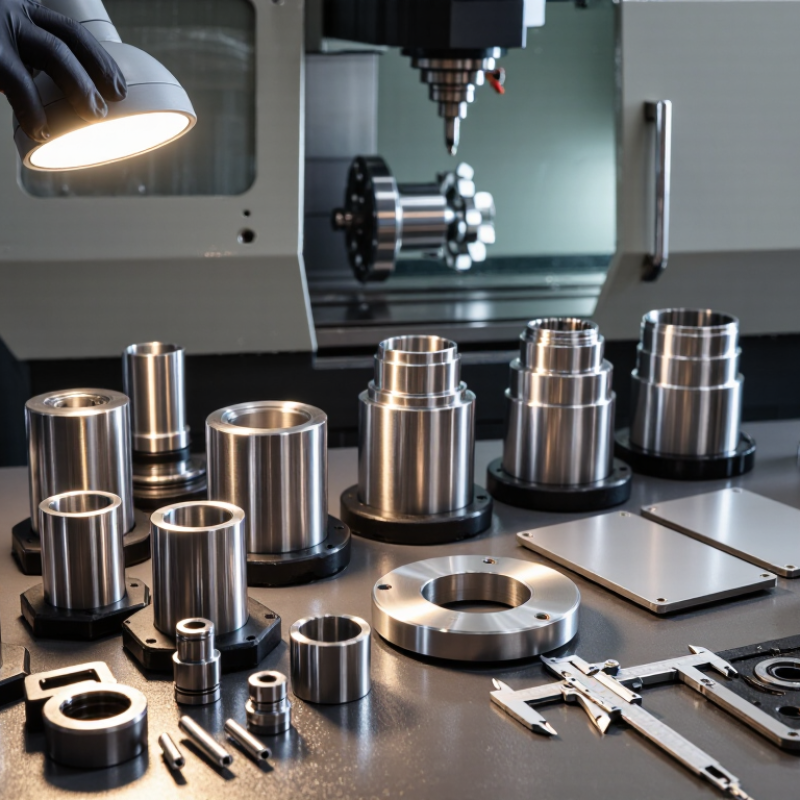
How to Choose CNC Machine Polishing Parts?

Define CNC Polishing Parts by Function, Material, and Tolerance Class

How to Choose CNC Machine Polishing Parts?

Define CNC polishing parts by function, material, and tolerance class. A polished sealing face needs low roughness and stable flatness. A sliding guide needs controlled friction, not mirror shine. Decorative parts prioritize uniform reflection and scratch resistance. Function comes first.

Material changes the polishing strategy. Aluminum can smear under excessive pressure. Stainless steel may show heat tint or embedded abrasive. Hardened tool steel often needs staged abrasives and careful coolant control. Polymers require lower heat and lighter contact.

The 2024 Grand View Research CNC machine market report estimated the global market at about USD 88.9 billion in 2023. That scale reflects rising precision demand, but it does not make every polishing process reliable.

Tolerance class needs equal attention. Specify dimensional tolerance separately from surface roughness. ISO 2768-m may suit general machining, while tighter assemblies may require individually stated limits.

A target such as Ra 0.8 µm can be practical for a bearing surface, yet insufficient for a sealing interface. Check waviness too. It is often overlooked.

I have seen bright parts fail because polishing removed edges and changed fit. That mistake is easy to repeat.

Record material hardness, starting roughness, final Ra, flatness, and inspection method. The 2023 World Manufacturing Production report from the International Organization of Motor Vehicle Manufacturers shows continuing pressure for efficient, consistent production, making repeatable inspection as important as visual quality.

Match Surface-Finish Goals: Ra 0.8–3.2 µm for General Applications

Choosing CNC machine polishing parts starts with the required surface finish, not the tool catalog. For many general applications, Ra 0.8–3.2 µm offers a practical target. It suits housings, brackets, covers, and non-sealing contact surfaces. A finer finish is not automatically better. It may increase cycle time and remove useful surface texture.

For Ra near 3.2 µm, select a moderately fine abrasive with stable cutting action. For Ra near 0.8 µm, use a finer polishing pad or finishing wheel. Rigid media can level visible tool marks on flat faces. Compliant pads work better around curved edges and shallow recesses. Keep the pressure steady. Excess pressure can create waves, heat marks, or uneven edges. Coolant selection also matters, especially with aluminum or heat-sensitive alloys.

Check the result with a calibrated roughness tester, using the correct cutoff length and measurement direction. Inspect several areas, not only the easiest surface. Feed direction can produce different readings across one part. I have seen parts pass a visual check but miss the Ra limit during measurement. That assumption can fail. Record tool speed, feed rate, pressure, and abrasive condition during trials. Replace worn polishing parts before they create inconsistent finishes. Ra alone may not describe scratches, waviness, or functional contact quality, so drawings and inspection plans should define those requirements clearly.

How to Choose CNC Machine Polishing Parts?

Match the polishing process to the required surface-finish goal. The chart uses commonly specified Ra values of 0.8, 1.6, and 3.2 µm for representative CNC applications.

Lower Ra values indicate a smoother surface. Use Ra 0.8 µm for precision contact or sealing areas, Ra 1.6 µm for general functional components, and Ra 3.2 µm for non-critical surfaces where standard machining is sufficient. Confirm the final value against the engineering drawing, material, tolerance, and service conditions.

Select Abrasive Grades from P240 to P1200 for Controlled Material Removal

Choosing CNC machine polishing parts starts with matching the abrasive grade to the required material removal. P240 is suitable for visible machining marks, shallow burrs, and uneven edges. It cuts quickly but can leave pronounced scratches. P400 offers a more balanced transition for aluminum, steel, and hardened components. Use steady pressure and keep the polishing part moving across the surface.

P600 is often practical when the component already has a fairly uniform finish. It removes the deeper marks from P240 or P400 without taking away excessive material.

P800 and P1200 support fine finishing before coating, sealing, or visual inspection. The higher the grade, the less material it removes. Small pressure changes can still affect the result.

In workshop trials, I check the surface under angled light after every grade. A profilometer can confirm roughness when appearance is not enough. Do not skip grades too aggressively. P240 scratches may remain after P800, especially on curved CNC parts. This rule is not perfect. Softer metals can clog the abrasive, while hardened steel may need slower passes. Clean the part between grades, because loose particles can create unexpected scratches. Short test areas help verify the sequence before polishing the entire component.

Compare Steel, Carbide, Ceramic, and Diamond Polishing Components

How to Choose CNC Machine Polishing Parts?

Steel components are economical and tough. They work well for light finishing, deburring, and softer metals. However, they wear faster against hardened surfaces.

Carbide offers higher wear resistance and keeps its shape under pressure. It suits hardened steel and repeated CNC production.

Ceramic withstands heat and provides stable abrasive action, but its edges can chip after impact.

Diamond delivers the highest cutting ability for carbide, glass, ceramics, and non-ferrous materials. Avoid using diamond aggressively on steel at high temperatures. Carbon diffusion can reduce its effectiveness. The U.S. Geological Survey’s 2024 Mineral Commodity Summaries estimated synthetic industrial-diamond output near 14 billion carats in 2023. This scale supports broad industrial availability, but it does not guarantee better polishing results. Hardness alone is a weak selection method.

Tips: Match the component to the workpiece, coolant, pressure, and target roughness. Check ISO 21920 surface-texture terminology before comparing measurements. Start with moderate pressure and inspect the contact face frequently. I would not choose diamond automatically. In many shop trials, carbide gives a more controlled finish and lower operating cost. Ceramic may look attractive on paper, yet one accidental impact can ruin its edge. Record tool wear, temperature, and Ra values during testing. Small measurements often expose poor assumptions.

Verify Runout Below 0.01 mm, Tool Life, Cooling, and Machine Compatibility

How to Choose CNC Machine Polishing Parts?

A polishing part should begin with measurable accuracy, not appearance. Verify runout below 0.01 mm at the working point. Use a calibrated dial indicator and a clean, properly seated taper. Dirt, burrs, or uneven clamping can create false readings. Check the result at several spindle positions. One measurement is not enough. I have seen a polished surface fail because the holder looked perfect but shifted under load. That mistake was expensive.

Tool life depends on workpiece material, abrasive load, cutting speed, and feed pressure. Select parts made for continuous contact and stable heat control. Inspect the polishing face for uneven wear after each trial batch. A simple wear log can reveal when performance starts declining. Do not trust the advertised service life blindly. Actual results often change with operator technique and surface hardness.

Cooling needs practical testing. Confirm that the part can handle the machine’s coolant type, flow rate, pressure, and filtration system. Poor filtration may clog narrow passages and scratch the workpiece. Excessive pressure can also disturb a delicate polishing setup. Check spindle speed, mounting dimensions, axis travel, and available clearance before ordering. The part must match the machine’s interface and control limits. I once overlooked clearance near a guard. It fit technically, but not safely. That detail still deserves more attention during selection.

FAQS

How should CNC polishing parts be selected for different functions?

Match the finish to the job. Sealing faces need low roughness and stable flatness. Sliding guides need controlled friction, not mirror shine. Decorative surfaces need even reflection and scratch resistance.

How does material affect the polishing process?

Aluminum may smear under heavy pressure. Stainless steel can show heat tint or trap abrasive particles. Hardened steel often needs staged abrasives. Polymers need light contact and low heat.

Should dimensional tolerance and surface roughness be specified separately?

Yes. State dimensional limits, roughness, flatness, and waviness separately. A surface with Ra 0.8 µm may suit a bearing, but not every seal.

Which abrasive grades are useful for CNC polishing?

P240 removes visible machining marks and shallow burrs quickly. P400 provides a smoother transition. P600 removes deeper scratches. P800 and P1200 support fine finishing.

Why should abrasive grades not be skipped too quickly?

Coarse scratches can remain under a finer finish, especially on curved parts. Clean the workpiece between grades. Loose particles create new scratches.

How can polishing quality be checked during production?

Inspect the surface under angled light after every abrasive grade. Use a profilometer when appearance is uncertain. Record starting roughness, final roughness, flatness, and inspection method.

What runout should be checked before using a polishing part?

Verify runout below 0.01 mm at the working point. Use a calibrated dial indicator. Check several spindle positions. One reading is not enough.

What machine conditions must be confirmed before ordering?

Check spindle speed, mounting dimensions, axis travel, clearance, coolant compatibility, flow, pressure, and filtration. A part may fit technically but still interfere with a guard. That detail is easy to miss.

Conclusion

Choosing the right Cnc Machine Polishing Parts requires evaluating their function, material, tolerance class, and compatibility with the machining process. Start by defining the required surface finish: a roughness range of Ra 0.8–3.2 µm is suitable for many general applications, while more demanding results may require additional finishing steps. Abrasive grades from P240 to P1200 can be selected according to the desired balance between material removal speed and surface refinement.

Material selection is equally important. Steel components offer durability, carbide provides strong wear resistance, ceramic supports consistent finishing, and diamond-based components are suitable for highly precise polishing tasks. Before use, verify that runout remains below 0.01 mm, then consider expected tool life, cooling requirements, and machine compatibility. A well-matched polishing component improves finish consistency, reduces unnecessary replacement, and helps maintain stable performance throughout production.


Mason

Mason

Mason is a seasoned marketing professional with a deep expertise in the company's offerings and a passion for driving brand awareness. With a strong background in digital marketing strategies, he has an innate ability to connect with diverse audiences and effectively communicate product benefits.......