2026 How to Choose a CNC Polishing Machine in India?

Time:2026-09-22 Author:Mason
0%

Choosing a CNC Polishing Machine In India in 2026 requires more than comparing prices and attractive catalog images. Indian manufacturers face varied materials, production volumes, workshop conditions, and finishing expectations. A machine designed for stainless steel may not deliver consistent results on aluminum, brass, stone, or engineered components. The correct choice begins with the workpiece, not the brochure.

This guide examines spindle power, axis control, abrasive compatibility, automation, polishing accuracy, and after-sales support. It also considers practical details, such as dust extraction, operator training, electrical stability, floor space, and spare-part availability. A reliable supplier should provide demonstrations, test samples, technical documentation, and transparent warranty terms. Ask for measurable results. Gloss level, cycle time, surface roughness, and rejection rates matter more than impressive claims.

The phrase Cnc Polishing Machine In India often suggests a simple buying decision. It is not. Local service response, import procedures, software support, and maintenance skills can strongly influence long-term costs. A lower purchase price may become expensive when a critical sensor remains unavailable for weeks. That risk deserves attention.

Experience also teaches an uncomfortable lesson: no machine suits every factory. Even experienced buyers can underestimate training time or fixture development. Therefore, this 2026 guide balances technical performance with operational reality. It encourages careful trials, documented comparisons, and honest questions before investment. The best machine is not always the fastest. It is the one that produces repeatable finishes, supports your team, and remains dependable after installation.
2026 How to Choose a CNC Polishing Machine in India?

What Is a CNC Polishing Machine and How Does It Work?

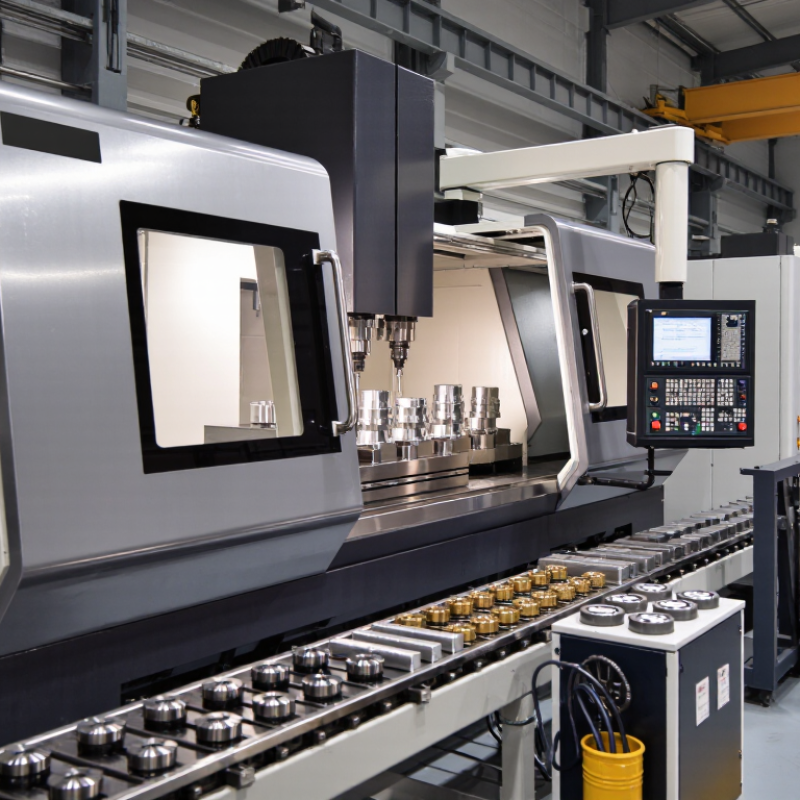
A CNC polishing machine is a computer-controlled finishing system for metal, stone, glass, or engineered surfaces. It follows programmed toolpaths from CAD or CAM files. Servo motors move the workpiece or polishing head along controlled axes. The spindle regulates abrasive speed, while pressure and feed rate shape the final finish. Some advanced systems use force sensors to maintain steady contact on curved edges.

The process is precise, but not automatic magic. Operators still select the abrasive sequence, coolant method, and dwell time. A rough steel component may need grinding, intermediate polishing, and final buffing. In India, this matters as factories manage heat, dust, voltage variation, and different material batches. The International Federation of Robotics reported 8,510 industrial robot installations in India during 2023, a 59% annual increase in World Robotics 2024. This growth suggests stronger demand for programmable finishing, but polishing remains application-specific.

When choosing a CNC polishing machine in 2026, examine axis travel, spindle range, force control, dust extraction, and local technical support. Check sample parts before purchase. Ask for measured roughness values, not only attractive photographs. ISO 230-2 provides methods for evaluating positioning accuracy and repeatability in machine tools. Those figures help compare machines fairly. My practical preference is stable repeatability over maximum spindle speed. Faster is not always better. The imperfect point is often overlooked: poor fixturing can ruin excellent CNC accuracy.

Which CNC Polishing Features Matter for Indian Manufacturing?

Choosing a CNC polishing machine in India requires more than checking spindle speed. The right features must match local materials, production volume, dust conditions, and operator skills. For stainless steel, stone, aluminum, or engineered surfaces, variable speed control improves finish consistency. A rigid frame matters when abrasive pressure changes across wide panels. It prevents visible waves and reduces rework. That detail is often underestimated.

Look for programmable pressure, adjustable polishing paths, and automatic tool compensation. These functions help maintain uniform edges on doors, cookware, architectural panels, and vehicle parts. Servo-driven axes should repeat positions accurately during long production runs. A simple interface in a regional language can shorten training, although translation quality must be checked. Remote diagnostics are useful where technical support is distant. One mistake is assuming more automation always means better output. It can add downtime when programming skills are limited. I would question any feature that operators cannot use confidently.

Indian factories should also examine electrical compatibility, cooling performance, and dust extraction. Voltage fluctuations can disturb precision equipment, so stabilisation and protection features deserve attention. Efficient cooling helps during hot summers and extended shifts. Choose sealed control cabinets when abrasive dust is heavy. Safety interlocks, guarded work zones, and emergency stops are essential. Ask for sample testing with actual workpieces before purchase. Measure cycle time, surface roughness, abrasive use, and setup effort. Maintenance access matters too. The cheapest machine may become expensive when filters, tooling, or training are difficult to manage.

2026: How to Choose a CNC Polishing Machine in India?

Which CNC polishing features matter most for Indian manufacturing?

The weighted evaluation model prioritizes features that directly affect production continuity, finish consistency, operating cost, and workplace safety. Buyers can adjust these weights according to material type, production volume, power conditions, and available technical support.

How to Match Machine Specifications with Your Workpiece Needs

2026 How to Choose a CNC Polishing Machine in India?

How to Match Machine Specifications with Your Workpiece Needs

Start with the workpiece, not the machine catalogue. Record its material, diameter, length, weight, and surface condition. Stainless steel, aluminium, brass, and hardened alloys respond differently to pressure and abrasive selection. A thin tube may need gentle, consistent contact, while a large shaft requires higher rigidity and stable support. Geometry matters too. Flat panels, internal bores, curved edges, and irregular castings may require different tooling or multiple axes.

Define the required finish before comparing spindle power. Measure surface roughness, such as Ra, and state the acceptable tolerance. A high-speed spindle cannot correct poor fixturing or excessive vibration. Check spindle speed range, motor torque, polishing head size, working envelope, table load, and automatic compensation. For long components, verify bed length and steady-rest capacity. For small parts, confirm whether the machine can control pressure without damaging edges. Small details matter.

I have seen buyers choose extra power and later struggle with heat marks on thin parts. More capacity is not always better. Test samples using the intended abrasive, coolant, and polishing pressure. Ask for measured results, not attractive photographs. In Indian workshops, also consider dust protection, voltage stability, operator training, and local technical support. These points are easy to overlook. A specification sheet may look complete, yet it cannot reveal every production problem. Leave room for trial runs and revise the selection after real testing.

2026 How to Choose a CNC Polishing Machine in India? - How to Match Machine Specifications with Your Workpiece Needs

Typical selection ranges for CNC polishing applications. Final specifications should be confirmed through workpiece drawings, sample trials, tooling checks and required surface-finish measurements.
Workpiece and Application Suitable Machine Configuration Typical Workpiece Size Recommended CNC Axes Typical Spindle or Wheel Speed Recommended Abrasive or Tool Surface-Finish Target Key Specification to Match India Site Requirements Selection Priority
Stainless-steel tubes and round bars Automatic centerless polishing machine with loading and unloading support Outside diameter: 10–100 mm
Length: up to 6,000 mm
2–4 controlled axes, depending on feed and polishing-head arrangement Workpiece rotation: approximately 1,000–3,000 rpm
Feed speed: approximately 0.5–8 m/min
Aluminium-oxide abrasive belts or sisal and buffing wheels Approximately Ra 0.2–0.8 µm for decorative stainless steel, depending on the process sequence Passage diameter, feed-roll adjustment, belt width, workpiece straightness Usually 415 V, three-phase, 50 Hz; dust extraction and polishing-compound collection may be required High
Flat stainless-steel sheets and panels CNC wide-belt or multi-head surface polishing machine with vacuum or roller support Width: 300–1,500 mm
Thickness: 0.5–20 mm
3–5 axes or synchronized polishing heads Belt speed: approximately 10–30 m/s
Feed speed: approximately 1–12 m/min
Coated abrasive belts, non-woven wheels and cloth buffing wheels Approximately Ra 0.1–1.0 µm, based on grit sequence and final buffing Maximum sheet width, minimum thickness, belt tracking, flatness control Stable three-phase supply, adequate floor area, dry-air supply for pneumatic components and filtration for metal dust High
Aluminium die-cast housings and covers 3-axis or 5-axis CNC robotic polishing cell with compliant spindle Typical envelope: 100–600 mm
Mass: approximately 1–25 kg
3 axes for simple surfaces; 5–6 axes for curved or multi-face components Spindle speed: approximately 3,000–12,000 rpm Fibre discs, abrasive flap wheels, cartridge rolls and non-woven tools Approximately Ra 0.4–1.6 µm before decorative finishing Robot payload, reach, spindle torque, fixture repeatability, tool-change capacity Three-phase power, guarding, interlocked safety doors, chip or dust extraction and compressed air commonly at 5–7 bar Critical
Brass, copper and zinc decorative components CNC automatic buffing and polishing machine with programmable pressure control Diameter or width: 20–500 mm
Length: up to 1,000 mm
3–6 axes, depending on contour complexity and number of polishing stations Buffing wheel speed: approximately 1,500–3,000 rpm
Linear feed: approximately 0.2–4 m/min
Sisal wheels, cotton buffs, emery belts and metal-polishing compounds Approximately Ra 0.05–0.4 µm for bright decorative surfaces Wheel diameter, pressure control, compound dosing, fixture indexing, heat management Effective ventilation, compound and dust collection, non-slip flooring and reliable 415 V three-phase power High
Precision shafts, pins and cylindrical components CNC cylindrical polishing or superfinishing machine with controlled axial reciprocation Diameter: 5–150 mm
Length: up to 1,000 mm
2–4 axes with synchronized rotation, traverse and polishing pressure Workpiece rotation: approximately 100–1,500 rpm
Oscillation frequency: application-dependent
Fine abrasive belts, stones or film abrasives Approximately Ra 0.05–0.4 µm; cylindricity and roundness must be checked separately Center height, maximum workpiece length, runout compensation, pressure stability Temperature-controlled inspection area is beneficial for tight dimensional tolerances; clean compressed air may be needed Critical
Automotive and engineering castings Heavy-duty CNC robotic grinding and polishing cell with automatic tool change Typical envelope: 200–1,200 mm
Mass: approximately 10–100 kg
5–7 axes for complex cast surfaces and multiple approach angles Spindle speed: approximately 4,000–10,000 rpm
Tool power: approximately 3–15 kW
Ceramic flap discs, grinding wheels, carbide burrs and abrasive brushes Approximately Ra 1.6–6.3 µm after surface correction, depending on casting condition Robot payload, spindle power, fixture rigidity, force-control range, chip evacuation Heavy foundation, guarded cell, extraction system, safety PLC, compressed air and sufficient maintenance access Critical
Small batch and high-mix components Flexible CNC polishing center with quick-change fixtures and recipe-based programming Typical envelope: 20–500 mm
Mass: approximately 0.1–15 kg
3–5 axes with teach-in or offline programming capability Spindle speed: approximately 2,000–12,000 rpm Interchangeable abrasive belts, wheels, brushes and polishing mops Approximately Ra 0.2–3.2 µm, depending on material and finishing route Changeover time, fixture flexibility, program storage, tool access and operator interface Choose a layout that permits manual loading, training access and future automation; provide stable power and dust control High
Large architectural or process-vessel components Large-format CNC polishing machine with adjustable support rollers and multiple polishing heads Diameter or width: 500–3,000 mm
Length: up to 12,000 mm
3–6 axes, depending on longitudinal travel and head articulation Workpiece rotation: approximately 20–300 rpm
Feed speed: approximately 0.1–3 m/min
Wide abrasive belts, sisal wheels and cotton buffing wheels Approximately Ra 0.2–1.6 µm for stainless-steel decorative or process surfaces Maximum envelope, machine bed length, support capacity, alignment accuracy, access for loading Verify transport route, factory ceiling height, foundation loading, power capacity and ventilation before purchase Site-dependent
Mirror-finish stainless-steel components Multi-stage CNC polishing line with roughing, intermediate polishing and final buffing stations Part-specific; commonly 50–1,500 mm in the longest dimension 4–6 axes with synchronized pressure and compound control Buffing wheel speed: approximately 1,500–3,000 rpm Progressive abrasive belts, sisal, treated cotton and loose cotton buffs Typically Ra 0.05–0.2 µm; visual uniformity also requires gloss and haze control Process repeatability, pressure control, compound metering, wheel balancing, cleaning stage Separate clean finishing area, effective compound filtration, controlled lighting and inspection equipment are recommended Very high

What Should You Check When Comparing Indian CNC Polishing Suppliers?

How to Choose a CNC Polishing Machine in India?

When comparing Indian CNC polishing suppliers, inspect more than the machine’s catalog price. Ask for a live demonstration using your actual material, shape, and finishing requirement. Observe the spindle movement, abrasive control, fixture stability, and polishing consistency. A polished sample should be measured, not judged only by appearance. Request surface roughness readings, cycle-time records, and dimensional results from repeated trials.

Check the supplier’s engineering experience. Can their team adjust tool paths for curved edges, internal surfaces, or uneven castings? Ask for drawings, electrical diagrams, maintenance schedules, and operator training details. Reliable suppliers explain limitations clearly. They should also provide information about spindle power, axis accuracy, coolant handling, dust control, and compatible abrasives. Small details matter.

Service quality is often revealed after installation. Speak with two or three existing users, preferably from similar industries. Ask how quickly technicians respond and whether spare parts are locally available. Confirm warranty terms, commissioning support, software updates, and calibration procedures. A low quotation may hide expensive downtime. I once focused too heavily on purchase cost and underestimated operator training. That mistake changed the evaluation process. Now, supplier communication is tested before any order. Slow replies, vague tolerances, or missing test data deserve careful attention. Pay attention there.

How to Plan Installation, Training, Maintenance, and Operating Costs?

2026 How to Choose a CNC Polishing Machine in India?

Planning costs requires more than comparing machine prices. Measure the workshop floor, doorway width, electrical supply, and drainage before ordering. Many Indian workshops need three-phase power, stable voltage, compressed air, and proper dust extraction. Confirm the machine’s floor load with a qualified installer. Installation may include transport, leveling, wiring, software setup, and commissioning. Keep extra time for regional logistics and unexpected site changes.

Training should cover programming, tool changes, safe loading, surface inspection, and basic fault diagnosis. Ask for practical training on your own material, not only demonstrations. Operators need simple checklists in their working language. Maintenance costs include polishing tools, coolant or water systems, filters, lubrication, calibration, and replacement sensors. Schedule daily cleaning and monthly inspections. However, maintenance estimates are often too optimistic. Dust, hard water, and rushed operators can increase downtime.

Tips: Request a written installation scope. Separate fixed costs from running costs. Estimate electricity, labor, consumables, software support, and service travel for twelve months. Keep critical spare parts on site. Record actual cycle times during training, because catalogue figures may not match local stone, metal, or production conditions. Start with realistic output targets. Small errors become expensive.

FAQS

What is a CNC polishing machine?

It is a computer-controlled system for finishing metal, stone, glass, and engineered surfaces. It follows programmed paths from design files. Servo motors move the polishing head or workpiece. The spindle controls abrasive speed. Some systems use force sensors on curved edges.

How does CNC polishing work?

Operators select abrasives, pressure, coolant, and dwell time. A rough steel part may need grinding first. Intermediate polishing follows. Final buffing creates the desired appearance. The process is precise, but not automatic magic.

Which features matter for Indian manufacturing?

Variable spindle speed helps control finish consistency. Programmable pressure supports uniform edges and curved surfaces. A rigid frame reduces visible waves on wide panels. Dust extraction protects equipment and improves the work area. More automation is not always better.

How should factories handle heat, dust, and voltage changes?

Choose efficient cooling for hot summers and long shifts. Use sealed control cabinets in dusty areas. Voltage protection can reduce precision problems. Safety interlocks and emergency stops are essential. These details are easy to ignore.

How can buyers compare machine performance fairly?

Test actual workpieces before purchase. Measure surface roughness, cycle time, abrasive use, and dimensions. Review positioning accuracy and repeatability data. Standardized testing methods can support fair comparisons. Attractive photographs are not enough.

Why is fixturing important in CNC polishing?

A stable fixture keeps the part correctly positioned. Poor support can create uneven pressure and visible marks. It may ruin excellent machine accuracy. I would check fixture rigidity early, not later.

What should buyers ask CNC polishing suppliers?

Request a live demonstration with the actual material and shape. Ask for tool-path examples, electrical diagrams, and maintenance schedules. Confirm training, calibration, spare parts, and technical response times. Vague tolerances deserve careful attention.

Is the cheapest CNC polishing machine the best choice?

Not necessarily. A low purchase price may hide training, filter, tooling, or downtime costs. Check warranty and commissioning support carefully. Speak with users in similar industries. I once focused too heavily on price. That was a poor evaluation habit.

Conclusion

Choosing a Cnc Polishing Machine In India requires a clear understanding of how the equipment works and how it fits your production goals. A CNC polishing machine uses computer-controlled movements to guide polishing tools across a workpiece, delivering consistent surface quality, accurate finishing, and repeatable results. Indian manufacturers should evaluate features such as multi-axis control, automation level, programming flexibility, polishing speed, safety systems, and compatibility with different materials and shapes.

Machine specifications should match the workpiece size, geometry, required finish, production volume, and tolerance standards. When comparing suppliers, examine technical support, customization options, spare-parts availability, warranty terms, installation assistance, and customer service responsiveness. It is also important to plan for transportation, commissioning, operator training, routine maintenance, consumables, energy use, and long-term operating costs. A well-planned investment can improve productivity, reduce manual effort, maintain stable quality, and support future manufacturing expansion.


Mason

Mason

Mason is a seasoned marketing professional with a deep expertise in the company's offerings and a passion for driving brand awareness. With a strong background in digital marketing strategies, he has an innate ability to connect with diverse audiences and effectively communicate product benefits.......